The jowai ladrymbai teer result is one of the regional archery lottery results published every day for the Jaintia Hills belt of Meghalaya, and if you live in or near Jowai or Ladrymbai, it is the result that matters most to you. Teer is the traditional archery based lottery of Meghalaya, legal and regulated by the state government, in which licensed counters sell tickets through the day and the winning numbers are decided by how many arrows hit the target at the archery ground. While Shillong, Juwai and Khanapara get most of the attention online, thousands of players in the Jaintia Hills follow the Jowai and Ladrymbai draws every single day. This guide explains what the jowai ladrymbai teer result is, where and when it is declared, how the two rounds work, how to read the result correctly, where to check it online, and how to use past archives responsibly. Everything here is evergreen and factual: no invented numbers, no prediction tips, and no house or ending forecasts anywhere.
What the Jowai Ladrymbai Teer Result Covers
The jowai ladrymbai teer result covers the daily archery draws held for the Jowai and Ladrymbai areas of the Jaintia Hills in Meghalaya. Like every teer game in the state, the day is split into two rounds, universally called the first round (FR) and the second round (SR). Tickets are sold at licensed counters from the morning onwards, archers shoot at the target ground in the afternoon, and the number of arrows that strike the target is counted. The last two digits of that count become the winning number for the round.
In practical terms, this means the jowai ladrymbai teer result that people look for each evening is simply a pair of two digit numbers, one for FR and one for SR. If a round is not held on a particular day, for example on a Sunday or a public holiday, the result is not declared and the board shows that there is no result rather than a number. Understanding this two round structure is the single most important thing a newcomer can learn, because almost every confusion about the jowai teer result or the ladrymbai teer result comes from mixing up the rounds, mixing up the markets, or expecting numbers that were never declared.
Jowai and Ladrymbai players often check the bigger markets too, but the local draw is the one tied to their own counters and their own archery grounds. If you bought your ticket from a counter in Jowai town or near Ladrymbai, the jowai ladrymbai teer result is the draw that decides your ticket. This is why regional result pages exist: they stop you from accidentally checking a Shillong or Juwai number against a Jowai ticket.
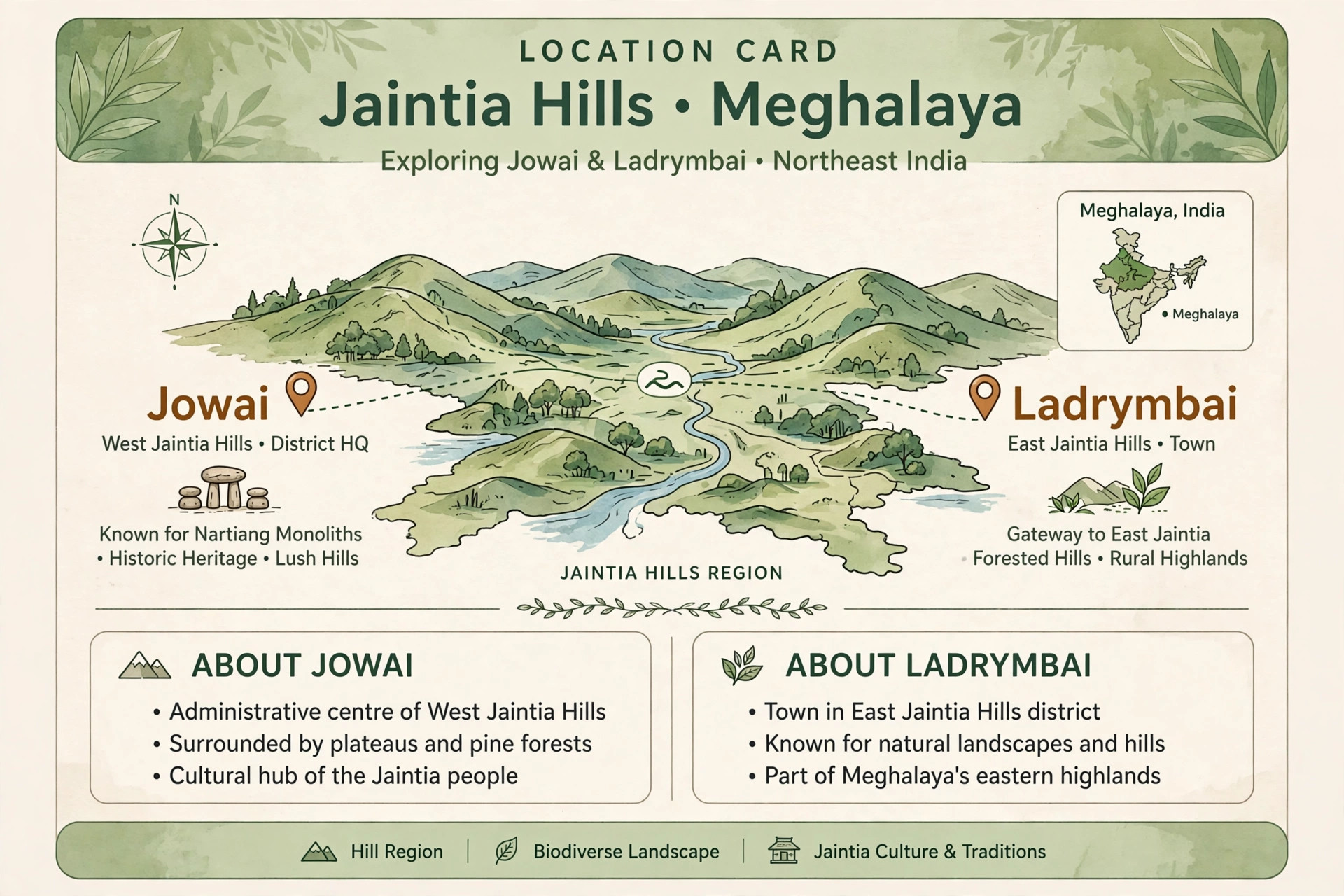
Where Jowai and Ladrymbai Are in Meghalaya
To understand the draw, it helps to know the place. Jowai is the district headquarters of the West Jaintia Hills district of Meghalaya, a busy town that serves as the commercial and administrative centre for the Jaintia Hills region. Ladrymbai lies nearby in the same Jaintia Hills belt. The region is known for its coal and limestone trade, its cool climate, and its strong tribal traditions, and teer has grown naturally here as part of the wider archery culture of the Khasi and Jaintia peoples.
Meghalaya legalises and regulates teer under state legislation, and the game is operated through licensed archery associations and counters. For background on the town itself, the Jowai article on Wikipedia gives a useful overview of its geography and history, and the official Meghalaya government portal is the authoritative source for how the state administers legal lotteries and related activities. Reading these official sources is always better than trusting random blogs that claim special knowledge about local draws.
The regional character of the game matters because teer is a physical game played on real archery grounds. Archers from local clubs gather, shoot a fixed number of arrows at a cylindrical bamboo target, and officials count how many arrows hit. That count, reduced to its last two digits, is the number. The jowai ladrymbai teer draw therefore reflects archery actually shot in the Jaintia Hills, not a computer generated figure and not a number copied from Shillong or Juwai.
How the Two Rounds Work in Jowai Ladrymbai Teer
Every daily session of jowai ladrymbai teer is organised into two rounds, and the result is always published as two separate numbers.
First Round (FR)
The first round is the opening draw of the day. Archers shoot their first set of arrows at the target, officials count the arrows that struck the target, and the last two digits of that count are declared as the FR number. Ticket sales for the first round close before the shooting begins, so only tickets purchased in time qualify for the FR draw.
Second Round (SR)
The second round follows the same pattern later in the day. Archers shoot again, the hits are counted, and the last two digits become the SR number. The SR round is a fresh draw: it does not depend on the FR number, and the arrows shot in the first round have no influence on the second round outcome.
The two digit format means the possible result runs from 00 to 99. If the count of arrows hitting the target is, for example, a number whose last two digits are 47, then the declared number for that round is 47. If the count ends in 00, the result is 00. The result board never shows anything other than two digits per round, which keeps the format simple and identical across every teer market in Meghalaya.
Jowai Ladrymbai Teer Result Timings
The jowai ladrymbai teer result follows the standard daily rhythm of Meghalaya teer: tickets are sold through the morning and early afternoon, and the two rounds are declared in the afternoon and evening. The exact declaration clock can shift slightly from day to day and from season to season, because the rounds depend on real archery being shot and counted at the ground, and counting takes as long as it takes.
As a general pattern, the FR declaration for Jowai Ladrymbai teer happens in the afternoon, and the SR declaration follows later, usually in the evening. Players should treat these as windows rather than fixed clock times. If a round is delayed by weather, by a large crowd at the ground, or by an official hold, the result is declared when the count is complete and verified, not rushed to meet a timetable.
Two practical habits will save you from timing confusion:
- Check the result only after the declaration window for that round has passed. Searching for the SR number in the early afternoon will either show you yesterday’s number or nothing at all.
- Never trust a site that publishes the jowai ladrymbai teer result hours before the archery could physically have been completed. A result that appears impossibly early is either copied from another market or invented.
On Sundays, teer is traditionally not played in Meghalaya, so there is normally no jowai ladrymbai teer result to check. The same applies on major state holidays. The daily archive on this site shows which days had draws and which did not, so you can confirm at a glance.

How to Read the Jowai Ladrymbai Teer Result Correctly
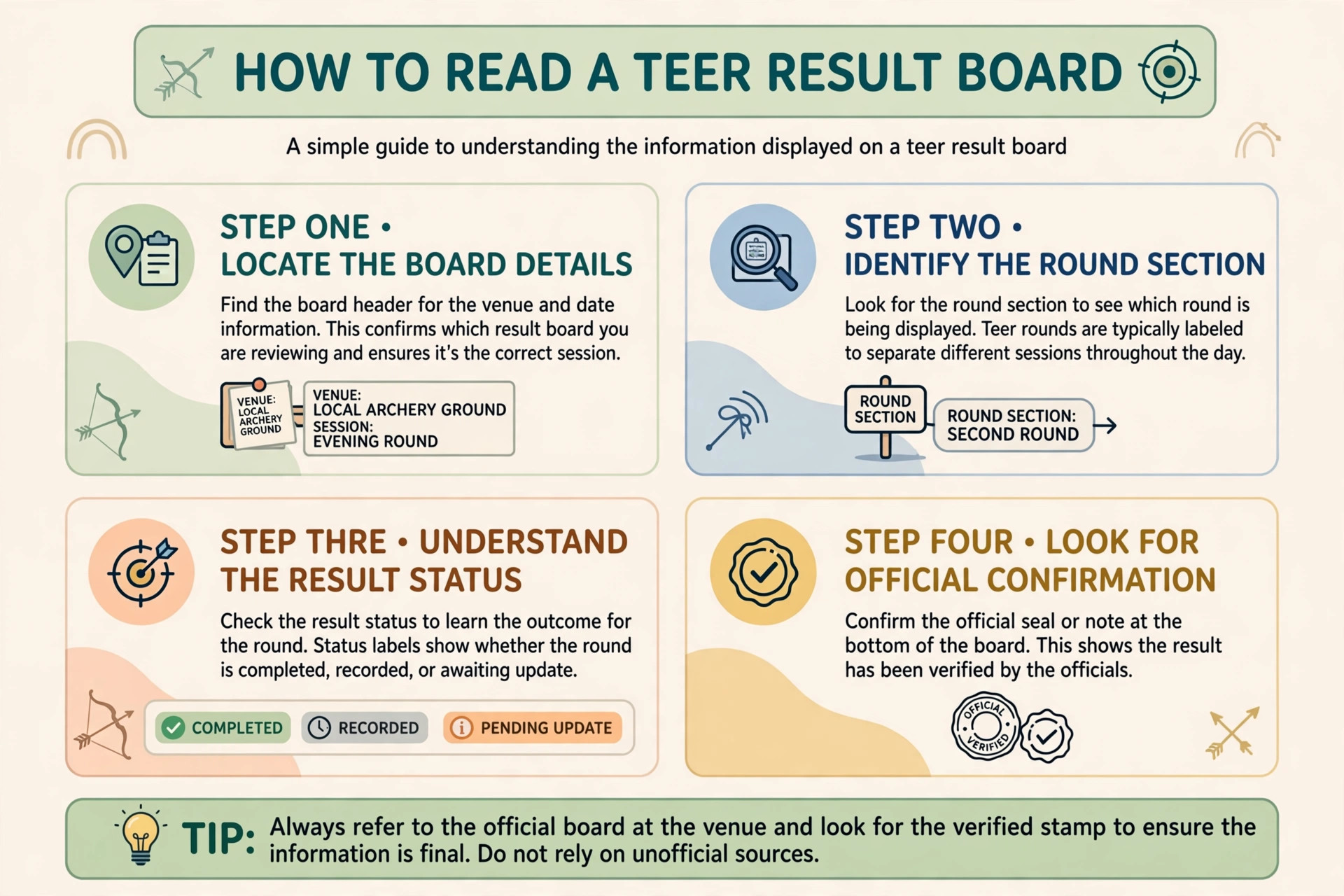
New players sometimes misread the result board, so here is a plain explanation of what each part means.
The daily board shows the date, the market name, and two numbers: FR and SR. A typical entry looks like this in format (numbers shown are a format example only, not a real result): Jowai Ladrymbai, FR: -, SR: -. When the rounds are declared, each dash is replaced by a two digit number from 00 to 99. A dash on the board means the round has not been declared yet or was not held that day, never a hidden number waiting to be revealed.
Three rules keep your reading accurate. First, always confirm the date on the board matches today, because search results and cached pages often show yesterday’s jowai teer result at the top. Second, confirm the market name says Jowai Ladrymbai and not Shillong, Juwai or Khanapara, since mixing markets is the most common mistake players make. Third, read FR and SR as two independent results: winning the first round does not change anything about the second round, and each ticket is tied to the round printed on it.
If you see a result that claims three digit numbers, morning and evening sub rounds, or bonus draws for Jowai Ladrymbai teer, treat it with suspicion. The official format is two digits per round, two rounds per day, nothing more.
Where to Check the Jowai Ladrymbai Teer Result Online
The fastest way to check the daily jowai ladrymbai teer result is right here on the Shillong Teer Result homepage, which publishes the latest numbers for all major markets as soon as they are declared and verified, so a single visit covers the Jowai Ladrymbai draw alongside the bigger sessions. For players who want the complete history in one place, the teer result list keeps past results organised by date and market, which is the easiest way to confirm what yesterday’s numbers were or to check whether a particular day had a draw at all.
Many Jaintia Hills players also keep an eye on neighbouring markets. The Juwai teer result page is useful because Juwai is the closest major teer centre to the Jaintia Hills and runs on the same daily rhythm, and the Shillong teer result page covers the flagship market that most of Meghalaya follows. Checking these pages is a matter of interest and comparison only: your Jowai ticket is decided by the jowai ladrymbai teer result, never by a Shillong or Juwai number.
A word of caution about where you check matters more than ever today. Dozens of copycat sites publish teer numbers, and some of them invent results before the archery is even finished to capture search traffic. The checklist for a trustworthy result page is short: it shows the correct date, it separates FR and SR clearly, it labels undeclared rounds with a dash instead of a guess, it never publishes prediction numbers, and it matches what the physical counters in your town are displaying. When in doubt, the counter where you bought your ticket is the final authority.
Jowai Ladrymbai Teer Compared With Shillong, Juwai and Khanapara
Players often ask how the jowai ladrymbai teer result relates to the bigger markets, so here is a clear comparison.
Shillong teer is the flagship and the most widely followed draw in Meghalaya, held at the Polo Ground in Shillong with the largest crowds and the most counters. Its result sets the tone for the day across the state, but it is a separate draw from Jowai Ladrymbai teer, decided by different archers on a different ground. A Shillong FR number has no bearing on the Jowai Ladrymbai FR number.
Juwai teer is the West Jaintia Hills neighbour that many Jowai players also follow. Juwai runs morning and day sessions in addition to the standard pattern, which gives it more draws per day than most markets, and its counters are the closest major alternative to the Jowai counters. Players sometimes buy tickets in both markets on the same day, which is fine as long as each ticket is checked against its own market’s result.
Khanapara teer is the Assam border market, popular with players on the Guwahati side. It is geographically and organisationally separate from the Jaintia Hills draws. If you are based in Jowai or Ladrymbai, Khanapara is mainly of passing interest.
The practical takeaway is simple: every market is its own draw with its own archers, its own count, and its own two numbers. The jowai ladrymbai teer result stands alone, and comparing it with other markets is useful only for understanding the day’s rhythm, never for deciding what any future number will be. No pattern across markets can predict the next count of arrows hitting a target.
Jowai Teer Counters, Tickets and How Play Works
Tickets for jowai ladrymbai teer are sold at licensed counters in and around Jowai town and the Ladrymbai area. A counter is a small authorised stall, and the ticket you receive states the date, the market, and the round your chosen number applies to. Prices are modest and set within the regulated framework, and there is no official online ticket sale: any website claiming to sell you a Jowai teer ticket online is not part of the legal game.
The playing process follows the same steps every day. You choose a two digit number from 00 to 99, you buy the ticket at a licensed counter before sales close for the round, the archers shoot, officials count and declare, and winning tickets are paid out at fixed prize rates through the counter network. Keep your ticket safe until both rounds are declared and you have checked the jowai ladrymbai teer result against it, because a lost ticket cannot be claimed.
Two responsibility notes belong here and on every teer page. Teer is a legal lottery in Meghalaya and is strictly for adults aged 18 and above. It is a form of gambling, so play only what you can afford to lose, treat it as entertainment rather than income, and never borrow money to play. If playing stops being fun, stop playing.
Previous Jowai Ladrymbai Teer Results and the Archive
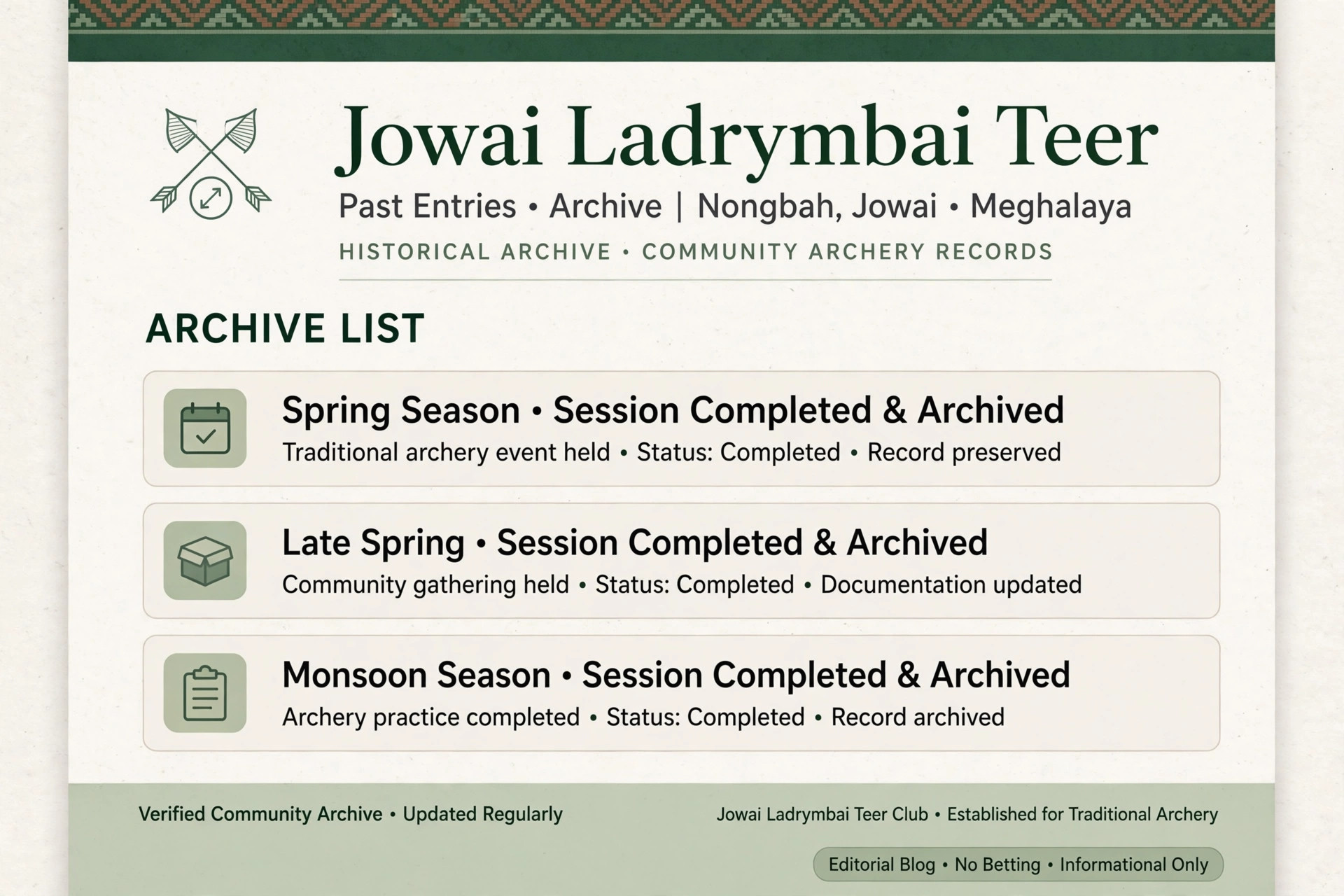
The archive of previous jowai ladrymbai teer results is useful for one legitimate purpose: confirming what was declared on past dates. Players use it to settle doubts about a ticket, to check whether a particular day had a draw, and to see the simple day by day record of FR and SR numbers.
What the archive cannot do is predict anything. Each round’s number comes from a fresh count of arrows hitting a target, and yesterday’s count has no mechanical influence on today’s. Charts that claim to find winning patterns in past ladrymbai teer result entries are reading meaning into randomness. This site keeps the archive as a record, not as a forecasting tool, and you will never find common numbers, hit numbers, target numbers, or house and ending tips here.
When you browse past results, keep the same discipline as with today’s board: confirm the date, confirm the market name, and read FR and SR separately. The teer result list page organises everything by date so that a quick scroll answers the two questions players ask most: what was the result on a given day, and was there a draw at all.
How Results Are Verified Before Publication
Trustworthy result pages do not simply copy numbers from other websites. The verification habit that matters is cross checking: a declared number should appear consistently across the physical counters in town, the archery association’s announcement, and reputable result pages. When at least two independent sources agree, the number can be treated as confirmed.
This site follows that discipline for the jowai ladrymbai teer result. Numbers are published after the declaration window, undeclared rounds are shown with a dash rather than a guess, and corrections are made openly if an early figure turns out to be wrong. If you ever see a result here that disagrees with your local counter, trust the counter and report the mismatch, because the ground where the archery happened is the primary source.
Players can help keep the ecosystem honest by refusing to share screenshots of results that lack a date or a market name. Most confusion on messaging apps comes from cropped images where nobody can tell whether the number is today’s or last week’s, or whether it belongs to Jowai Ladrymbai teer or to Shillong. Always share the full board with the date visible.
Festivals, Seasons and the Jaintia Hills Teer Calendar
Teer in the Jaintia Hills follows the rhythm of local life. On Sundays there is traditionally no play, and on major festivals and state holidays the draws may be paused. The Behdienkhlam festival, the most famous cultural event of the Jaintia people, is one of the occasions when normal schedules can shift, and players should expect the result board to show no draw on such days rather than assuming a delay.
Weather also plays a role that outsiders underestimate. Archery cannot be shot safely in heavy rain or poor light, and Meghalaya’s monsoon can push a declaration later than usual or, on rare days, affect scheduling. A late jowai ladrymbai teer result on a stormy afternoon is normally a sign that the organisers waited for safe shooting conditions, not a sign that anything is wrong.
The calendar habit that serves players best is to check the archive for the pattern of non draw days rather than memorising a list. Festivals move, holidays are announced yearly, and the archive always reflects what actually happened.
Common Mistakes Jowai Ladrymbai Players Make
After years of watching how people use regional result pages, the same mistakes appear again and again, and all of them are avoidable.
The first is checking the wrong market: reading a Shillong or Juwai number against a Jowai ticket. The fix is to always confirm the market name on the board before reading the numbers. The second is checking too early: looking for the SR number before the second round has been shot and counted. The fix is to learn the declaration windows and check after them, not before. The third is trusting forwarded screenshots without a date. The fix is to open the result page yourself and confirm the date line.
The fourth mistake is the most expensive: believing in prediction. No chart of past jowai teer result entries, no dream number list, and no paid tipster can change the count of arrows that will hit a target this afternoon. Money spent on prediction is money lost before the first arrow is even shot. The fifth mistake is playing on credit or chasing losses by doubling up after a losing round. Teer is entertainment with a fixed, modest cost per ticket; the moment it becomes a plan to make money, it has become a problem.
Frequently Asked Questions
What is the jowai ladrymbai teer result?
The jowai ladrymbai teer result is the daily declared outcome of the archery based teer lottery for the Jowai and Ladrymbai areas of the Jaintia Hills in Meghalaya. Each day’s result consists of two numbers, one for the first round (FR) and one for the second round (SR), each a two digit number from 00 to 99 decided by the count of arrows hitting the target at the archery ground.
At what time is the jowai ladrymbai teer result declared?
The two rounds are declared in the afternoon and evening following the standard Meghalaya teer rhythm, with FR declared first and SR later in the day. Treat these as windows rather than exact clock times, because the declaration depends on real archery being shot and counted. There is no draw on Sundays and major holidays. Check the Shillong Teer Result homepage after the declaration windows for the confirmed numbers.
How do I check the ladrymbai teer result online safely?
Open this site’s homepage or the teer result list page, confirm that the date shown matches today, confirm the market name reads Jowai Ladrymbai, and read the FR and SR numbers separately. Avoid sites that publish numbers before the archery could have finished, sites that mix markets without clear labels, and forwarded screenshots that hide the date. When in doubt, confirm against the licensed counter where you bought your ticket.
What is the difference between the jowai teer result and the ladrymbai teer result?
They refer to the same regional draw. Jowai is the district headquarters town of West Jaintia Hills and Ladrymbai is a nearby town in the same Jaintia Hills belt, and the combined name covers the local teer market serving both areas. There is one FR number and one SR number per day for this market, not separate Jowai and Ladrymbai numbers.
Where can I find previous jowai ladrymbai teer results?
Past results are kept in the archive on the teer result list page, organised by date and market. The archive is useful for confirming what was declared on earlier dates and for checking which days had no draw. It cannot be used to predict future numbers, because each round is decided by a fresh count of arrows hitting the target.
Is Jowai Ladrymbai teer legal, and who can play?
Yes. Teer is a legal lottery in Meghalaya, regulated by the state government and operated through licensed archery associations and counters. Play is strictly for adults aged 18 and above. Tickets are sold only at licensed physical counters; there is no official online ticket sale. Play responsibly and only with money you can afford to lose.
Why does the result board show a dash instead of a number?
A dash means the round has not been declared yet or was not held that day. It is never a hidden number. If the dash appears during the day, the round is still pending and you should check back after the declaration window. If it appears for a Sunday or a holiday, there was no draw that day.
Conclusion
The jowai ladrymbai teer result is a simple daily pair of numbers, FR and SR, decided by real archery in the Jaintia Hills and declared each afternoon and evening. Check it on a trustworthy page that shows the correct date and the correct market name, read the two rounds separately, use the archive only as a record of what happened, and ignore every form of prediction. Played responsibly and at licensed counters by adults, teer remains what it has always been in Meghalaya: a traditional game of skill and chance rooted in the archery culture of the hills.