
New players hear the terms constantly and mix them up just as constantly: morning teer vs day teer. Are they two games or one? Do they share results? If you play the morning, are you also in the day game? This guide settles every version of that confusion. Morning teer and day teer are two separate sessions of the same archery lottery, played on the same day by the same clubs, but with independent rounds, independent results, and independent tickets. Understanding the difference is the foundation of following teer correctly, and this comparison walks through every angle: timings, mechanics, crowds, tickets, results, and the mistakes players make when they blur the two together.

Morning Teer vs Day Teer – Two Sessions, One Game
The simplest way to think about it: teer runs twice a day in most markets, once in the morning and once in the main daytime (afternoon) slot. Each session is a complete game in itself, with its own FR (first round) and SR (second round), its own archers shooting at its own time, and its own declared numbers. The morning session does not feed into the day session. The day session does not continue the morning session. They are siblings, not chapters.
This independence is the single most important fact in the morning teer vs day teer comparison, because nearly every player error flows from forgetting it. A morning ticket is settled only by morning numbers. A day ticket is settled only by day numbers. A morning FR result has no bearing on the day FR result, just as yesterday’s weather has no bearing on today’s. The archers shoot fresh, the counting starts fresh, and the numbers are fresh.
Why two sessions at all? The answer is part practical and part cultural. Practically, two sessions double the game’s daily capacity: more tickets, more players served, more employment across the counter network. Culturally, the rhythm suits the region: an early game for the morning crowd and a main game in the afternoon when the towns are fully awake. Over the decades, players have built routines around both, and the two session structure is now simply how teer days are shaped in Meghalaya.
On this site, the sessions are kept visibly separate. The Shillong morning teer result page covers the early game, while the Shillong teer result page centers on the main day session. Checking the right page for the right ticket is the habit that prevents the classic mix up, and it takes less time than reading a single wrong number.
Session Timings Compared – When Each Game Declares
Timing is the most visible difference between the sessions, and the one players plan their days around. The morning session declares first: its FR is typically announced in the late morning, around 10:30 AM Indian Standard Time, with the SR following about an hour later, around 11:30 AM. These are typical windows, not exact appointments; the precise minutes can shift slightly with the day’s conditions, and the only exact record is the declaration time shown on the result card itself.
The day session, the main afternoon game, declares later: its FR is typically announced in the mid afternoon, around 3:45 PM IST, with the SR following around 4:45 PM IST. Again, these are approximate windows. Between the morning SR and the day FR lies a quiet middle of the day, several hours during which no teer is shot and the counters serve the afternoon’s ticket buyers.
This schedule shapes the player’s day. Morning players check results before lunch and are done with the game by midday. Day players buy tickets through the morning and early afternoon, then watch the declarations in the late afternoon. Players who follow both sessions get two distinct episodes of the game with a long intermission, which many describe as the ideal rhythm: the morning game as a light start, the day game as the main event.
One scheduling note applies to both sessions equally: Sunday is a holiday. No morning teer and no day teer are played on Sundays, and the archives of both sessions correctly show Sunday gaps. Public holidays can also affect either session, so on a holiday week, confirm before assuming the normal pattern holds, and check the archive for how past holidays were handled.
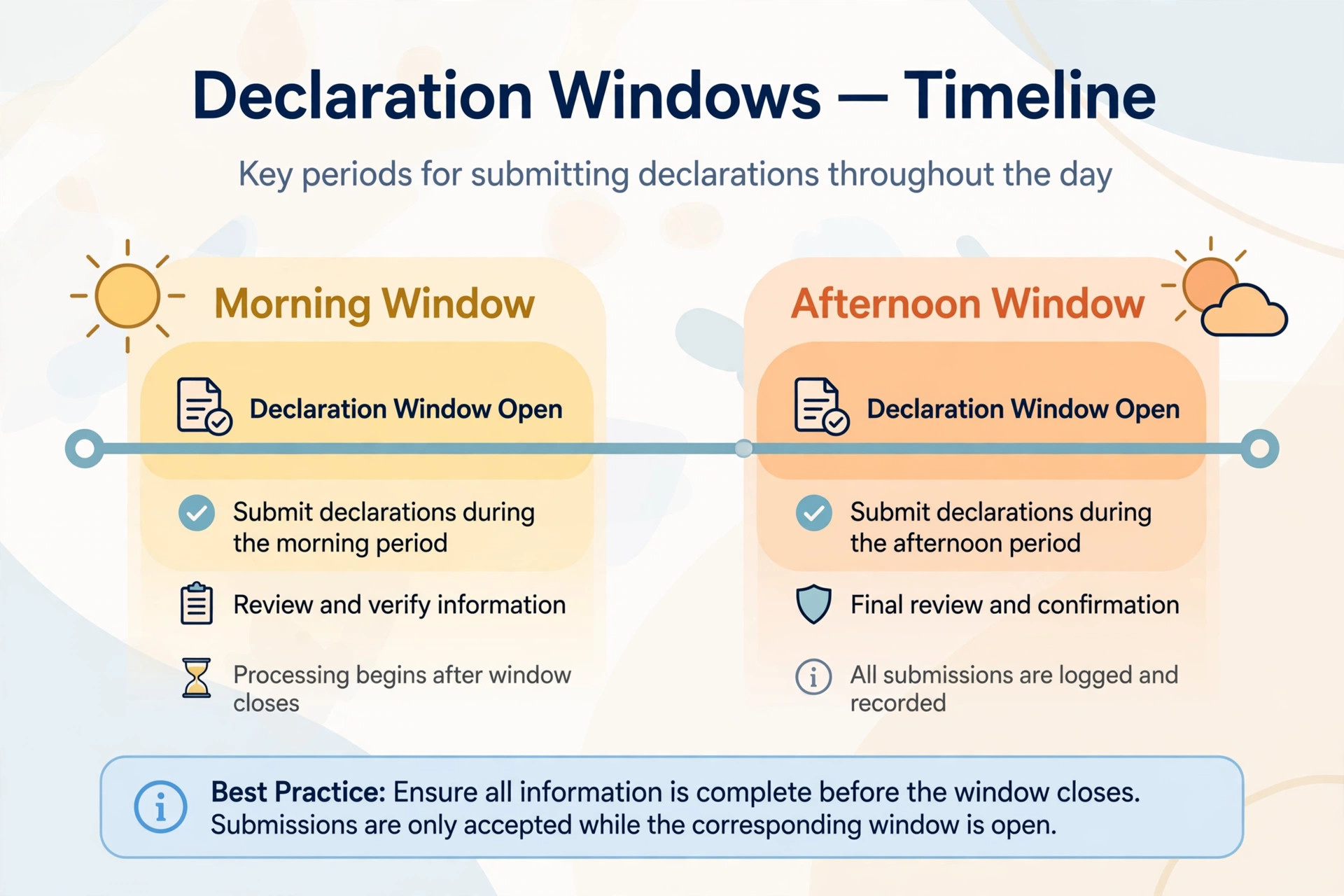
How the Rounds Work in Each Session – Same Rules, Fresh Shoots
Mechanically, the morning and day sessions are identical. In each session, a set of archers shoots arrows at a target in the first round, officials count the arrows that hit, and the last two digits of the count become the FR result, a number from 00 to 99. After a break, the second round follows the same procedure with a fresh shoot, producing the SR result. The format does not change between morning and day; only the archers’ session changes.
What does change is the shooting itself, because it happens at a different time under different conditions. Morning light, morning air, and a morning crowd create one set of shooting conditions; afternoon light, afternoon air, and a bigger crowd create another. None of this is mystical. It is simply the physical reality that no two shoots are ever identical, which is part of why the results are independent. But players should not over interpret this either: the differences are ordinary variation, not a secret code. The morning conditions do not systematically favor any particular outcome over the day conditions.
The number of archers and arrows follows the same structure in both sessions: a larger first round shoot and a shorter second round. Ticket holders do not need to know the exact counts, but understanding the shape helps when reading about the game. The FR is the main event of each session with the fuller shoot; the SR is the quicker follow up. This shape repeats in the morning and again in the day, giving each teer day its characteristic four beat rhythm: morning FR, morning SR, day FR, day SR.
For a deeper look at how any single session works from first arrow to declared number, the what is Shillong teer explainer covers the mechanics in full. The key takeaway for this comparison is symmetry: learn one session’s mechanics and you have learned both, because the rulebook does not change with the clock.
Morning Teer vs Day Teer – Crowds, Counters, and Culture
The two sessions have distinct personalities, shaped by who plays them and when. The morning session belongs to the early risers: shopkeepers opening their shutters, workers starting their day, and regulars who like their game finished before lunch. Morning counters have a brisk, businesslike atmosphere. Queues are shorter, transactions are quicker, and the whole session has the feel of a morning ritual slotted efficiently into the day.
The day session is the social centerpiece. By mid afternoon, the towns are fully awake, the counters are at their busiest, and the declaration period has a festival edge, especially around the day FR when the biggest crowd gathers. More tickets are sold for the day session than the morning, more conversations happen around it, and for many players the day game is simply “the teer,” with the morning as a pleasant extra. If you visit Shillong during the day FR window, the energy around the Polo Ground area is unmistakable.
Counter operations adapt to both. Morning counters open early and handle the morning ticket rush, then transition to selling day session tickets through the late morning and early afternoon. Staffing peaks around the day session. For players, the practical lesson is to match your visit to your game: buy morning tickets early without rushing, and allow extra time at the counter during the day session’s busy pre declaration hour, when queues are longest and errors most likely.
Neither session is “better” in any objective sense. Morning players value the early finish and the calmer counters. Day players value the bigger atmosphere and the main event feeling. Many dedicated players simply play both, treating them as two independent chances in the day rather than as rivals. The comparison is not a contest; it is a menu.

Tickets and Claims – Why the Session on Your Ticket Decides Everything
Here is where the morning teer vs day teer distinction has financial consequences. Your ticket names its session, and that session alone settles it. A morning FR ticket is settled only by the morning FR declaration. A day SR ticket is settled only by the day SR declaration. Presenting a morning ticket against day numbers, or vice versa, is the most expensive mix up in teer, and it happens most often to players who buy both sessions’ tickets and fail to label them.
The defense is labeling and separation. Keep morning tickets and day tickets in different pockets, envelopes, or sections of your wallet, and glance at the session printed on each ticket before you put it away. When you check results, check the session that matches the ticket in your hand. The result pages on this site label every card with its session precisely so this check takes one second.
Claiming follows the same session logic. Morning winnings are typically claimed the same day, often within hours of the morning SR, while counters are open and the day’s business is flowing. Day winnings can be claimed the same afternoon or evening. The claim itself happens at the licensed counter where you bought the ticket, with the physical ticket as the claim document. A full walkthrough of the claiming process is on the how to claim teer prize page, and every step there applies equally to morning and day wins.
One more ticket subtlety: the two sessions’ tickets can look very similar, especially when bought at the same counter on the same day. Train your eye to find the session line first, before the numbers. Players who check the session first essentially never suffer the cross session mix up; players who look at the numbers first invite it.
Reading Results for Both Sessions Without Mixing Them Up
Result literacy across two sessions is a small skill with a big payoff. Each result card on this site shows five things: the market, the session, the round, the number, and the declaration time. For a two session player, the session field is the one to verify first, every time. “Morning” versus “day” is the difference between your ticket winning and your ticket being irrelevant to the number you are reading.
The busiest confusion windows are the natural ones: late morning, when the morning SR has just declared and players are still looking at morning cards while day tickets are being sold; and mid afternoon, when the day FR approaches and morning cards are still visible on multi session pages. During these windows, slow down and read the labels before the digits. The digits are what you want, but the labels are what make the digits meaningful.
Archives deserve the same care. The teer result list keeps past days organized, and each past day shows both sessions side by side. When researching a previous result, confirm the session column before copying a number into your records. A personal record book with session labeled entries (“morning FR,” “day SR”) is immune to this entire class of error, and keeping one is a habit worth building from your first week of play.
Finally, remember what results cannot do, in either session. Past morning numbers do not predict future morning numbers. Past day numbers do not predict future day numbers. Morning numbers do not predict day numbers. Each round is an independent shoot, and the archive is a record, not a forecast. This site publishes no prediction content for either session, and any source offering “morning vs day” prediction systems is selling fiction.

Frequently Asked Questions
What is the difference between morning teer and day teer?
They are two separate sessions of the same archery lottery played on the same day. Each has its own FR and SR rounds, its own declaration times, and its own results. The morning session declares in the late morning; the day session, the main afternoon game, declares in the mid to late afternoon. Tickets, results, and claims are all session specific.
Can I use a morning teer ticket for the day session?
No. A ticket is valid only for the session, round, and date printed on it. A morning ticket is settled exclusively by the morning declaration, and a day ticket exclusively by the day declaration. Always check the session on your ticket before leaving the counter.
Which session is more popular, morning or day teer?
The day session draws the larger crowd and more ticket sales; it is the main event of the teer day. The morning session has a loyal following among early risers and players who prefer a calmer counter experience. Many dedicated players follow both sessions as two independent games.
Do morning results affect day results?
No. Each round is an independent shoot with fresh archers, fresh arrows, and a fresh count. Morning numbers have no influence on day numbers, and past numbers in either session do not predict future numbers in either session.
What time do the morning and day sessions declare?
Typically, the morning FR declares around 10:30 AM IST with the morning SR around 11:30 AM IST, and the day FR declares around 3:45 PM IST with the day SR around 4:45 PM IST. These are approximate windows in Indian Standard Time; exact minutes vary by day. No sessions run on Sundays.
Where can I check both sessions’ results?
This site keeps them on dedicated pages: the Shillong morning teer result page for the early game and the Shillong teer result page for the main day session, with past days in the teer result list archive.
Is teer legal, and who can play?
Teer is a legal, state regulated lottery in Meghalaya, strictly for adults aged 18 and above. Official state information is available on the Meghalaya government portal, and regional background is on Wikipedia. Always play responsibly and within a fixed budget.
Conclusion
Morning teer vs day teer is not a rivalry but a rhythm: two independent sessions, same rules, different hours, different crowds, and completely separate tickets and results. Learn the timing of each, always verify the session on your ticket and on every result card, keep your records session labeled, and treat past numbers as history rather than prophecy. Do that, and the two sessions stop being a source of confusion and become what they are meant to be: two enjoyable halves of the teer day. Whether you play the brisk morning game, the bustling afternoon main event, or both, the same disciplines apply to each: budget your play, buy only at licensed counters, and keep the game firmly in the entertainment column of your life.

Teer is a legal lottery in Meghalaya for adults aged 18 and above. Play responsibly.