Shillong is where teer vocabulary was born, so the best way to get your teer terms explained is to learn them the Shillong way: on the Polo Ground, in the market counters, and in the daily rhythm of the Khasi Hills. Teer is an archery-based lottery played legally in Meghalaya, and Shillong is its beating heart. Every abbreviation, every piece of slang, every formal term in the teer glossary either started here or passed through here on its way to Juwai, Khanapara, and the wider world.
This guide explains teer words through Shillong stories and Shillong schedules. It is informational only: no predictions, no tips, no betting advice. When the words feel like home, visit the Shillong Teer Result homepage and read the day’s numbers like a local.
Teer Terms Explained – Shillong: Where the Words Were Born
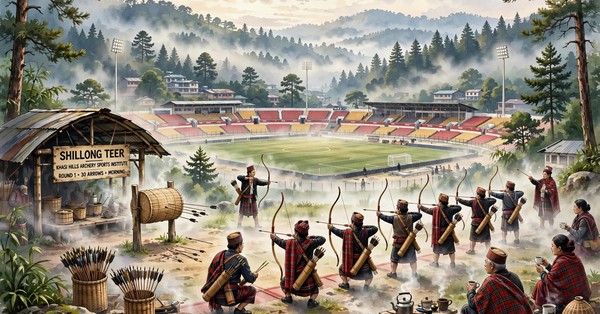
Start with the ground itself. Polo Ground in Shillong is the historic field where the main Shillong teer rounds are shot every playing day. The name dates to the colonial era, when the field hosted polo matches, but for generations now it has belonged to archery. Say “Polo Ground result” anywhere in the Northeast and people hear “Shillong teer result.” The venue is that central to the game’s identity.
The game at Polo Ground is conducted by the Khasi Hills Archery Sports Association, the licensed body that organizes the Shillong Teer. The association oversees the archers, the shooting, the counting of hits, and the declaration of results. Its member clubs supply the bowmen. When teer language speaks of an “official” or “declared” result, it means a number certified through this chain, from the field to the association’s announcement.
And the word teer itself? It comes from Hindi/Urdu and means “arrow.” In Shillong, that is not etymology trivia; it is the daily reality. Fifty archers take the field for each round, drawing traditional bows at straw targets while crowds and officials watch. The arrow is not a logo or a metaphor here. It is the instrument that produces every number.
Teer Terms Explained – FR and SR the Shillong Way
In Shillong, the day has a rhythm you can set your watch by, and the round vocabulary describes it exactly.
FR, the First Round, is the afternoon’s opening shooting session. Fifty archers each shoot thirty arrows at the target. Officials count every hit, an arrow that strikes the straw, and the last two digits of the total become the FR result number. The Shillong FR number is traditionally declared at 3:45 PM Indian time. Around Polo Ground and across the city’s counters, “FR is out” is the afternoon’s most repeated sentence.
SR, the Second Round, follows with the same fifty archers shooting twenty arrows each. Fresh shooting, fresh count, and a completely independent two-digit number, traditionally declared at 4:45 PM Indian time. Visitors often ask whether the second round is a continuation of the first. Locals will correct you with a smile: two shootings, two counts, two numbers. The gap between them is just the time it takes to shoot and count.
A round in Shillong means a round of shooting, not a round of betting. The distinction matters because it keeps the vocabulary honest: every term points to something that physically happened on the field. A miss is an arrow off the target, and in player talk it also means a chosen number that did not match. A hit is an arrow on target, and in conversation it means a number that matched the declared result.
A Walk Through Polo Ground on a Playing Day
To truly feel Shillong teer vocabulary, imagine standing at Polo Ground on a playing afternoon. The field fills gradually: archers with their traditional bows, officials with their counting sheets, and spectators finding shade along the edges. The air carries the particular focus of a contest about to begin.
The first round starts, and fifty archers shoot in turn, thirty arrows each. You hear the soft thud of arrows finding straw and the murmur of the crowd tracking the rhythm. Nobody here says “first round” in full. It is “FR” in every conversation, the abbreviation rolling off tongues that learned it from newspapers decades ago.
When the shooting ends, officials move among the targets, counting hits with practiced speed. The total goes up, the last two digits are taken, and the association’s declaration follows. “FR is out” ripples through the crowd and the counters across the city within minutes. Phones light up. The afternoon’s first number belongs to everyone now.
Then the archers rest, restring, and return. The second round, twenty arrows each, runs its course with the same ceremony. Another count, another declaration: “SR is out.” By late afternoon, the day’s main session is complete, two numbers standing as the record of hundreds of arrows. Walking off the ground, you understand viscerally what the vocabulary describes, because you watched every word happen.
Morning and Night: Shillong’s Extra Sessions
The main afternoon session is not Shillong’s only game. The city also runs a morning teer session, with its own FR and SR declared in the late morning, around 10:30 AM and 11:30 AM. The structure is identical: fifty archers, two shootings, two independent numbers. Only the hour changes.
Then there is night teer, the late-evening session with its own pair of rounds, the first traditionally declared at 11:10 PM and the second at 12:10 AM Indian time. Night teer has its own following and its own page, and its vocabulary is the same FR/SR language spoken after dark.
The lesson for beginners: never read a round label without its session. Morning FR, main FR, and night FR are three different numbers from three different shootings. Shillong regulars never confuse them, because the session is always part of the phrase. Make it part of yours.
Reading Shillong Numbers: Direct, House, Ending
When the count is done at Polo Ground, the outcome is published as a two-digit number from 00 to 99, always written with two digits. Here is how Shillong talks about those digits.
The result number is the official outcome of the round. The direct is the same number spoken as a whole: “What was the direct in SR?” asks for the exact announced figure. Split the number and you get the house, the first digit, and the ending, the second digit. In a result of 72, the house is 7 and the ending is 2. Ten houses and ten endings, 0 through 9 each, account for every number from 00 to 99.
Shillong counter conversation is full of these splits: “house 7 twice this week,” “ending 2 in the morning.” This is descriptive talk about past results, the local equivalent of discussing yesterday’s cricket scores. Recognizing the words lets you follow along. This guide defines them so you can understand the conversation; it does not suggest what to play.
A dash on the board means no number is available for that slot: the round has not been shot yet, or the day is a rest day. It is a placeholder, never a result. And 00, when declared, is a perfectly valid outcome, the last two digits of a hit count like 1,400.
The Shillong Counter Culture: Tickets and Talk
Away from Polo Ground, the vocabulary lives in Shillong’s market counters, the licensed shops where tickets are sold. The seller, sometimes called a bookmaker in traditional betting language, is an authorized vendor: the role is official and regulated, and the word carries no shadow in teer context.
Your ticket is the printed slip recording your numbers, round, stake, and date. The stake is what you paid, commonly starting around ten rupees, and prizes are multiples of it. Your selection is your forecast, the formal word from old rulebooks for the numbers you chose. Guard the ticket; it is the only proof of play, and a lost ticket generally cannot be honored.
The prize is the payout for a winning ticket, at fixed rates set by the organizers. Collecting it is a prize claim, made at the counter within the claim period printed on the ticket. Miss the deadline and the winnings sit unclaimed. Every Shillong regular has a story about someone who learned about claim periods the hard way. Learn from their stories instead of your own experience.
Counter talk has its own stock phrases. “Counter closed” means sales for the round have ended. “Result declared” means the association has announced the official number. “Previous list” means an earlier day’s table. Pick up these phrases and you will sound like you belong within a week.
Shillong Teer Words in the Wild
Some vocabulary only makes sense when you hear it where it lives. Here are phrases overheard around Shillong, decoded.
“FR out ni?” mixes Khasi phrasing with the abbreviation to ask whether the first-round result is declared. Multilingual counters produce these hybrids constantly, and they are perfectly normal. The meaning is always “is FR declared?”
“Morning ka FR kya aaya?” blends Hindi into the question: what came in the morning first round? Shillong’s markets are linguistically mixed, and teer talk absorbs whatever language is handy. Do not let the mixing confuse you; the skeleton is always session plus round plus “what was the number.”
“Ticket kat gaya?” asks whether the counter has cut, meaning issued, your ticket. “Kat gaya” is counter slang for the ticket being printed and handed over. Once your ticket is cut, your forecast is locked for that round.
“Association ne declare kiya” is how careful players confirm a number: the association declared it. This phrasing marks the speaker as someone who waits for official numbers rather than trusting forwards. It is the most trustworthy sentence in teer conversation.
Learning these phrases is optional, but recognizing them removes the last barrier between you and fluent teer talk. The formal terms from this guide are the grammar; these street phrases are the accent.

Words Visitors Always Ask About
Visitors to Shillong, and readers new to teer pages, tend to ask the same questions. Here are the answers in one place.
Why is there no teer on Sundays? Sunday is the weekly rest day at Polo Ground and the other main centers. No rounds are shot, no numbers declared. Result pages show a holiday marker. Sunday off is tradition, not a technical problem, and it applies across Shillong, Juwai, and Khanapara.
What does “declared” really guarantee? That the number passed through the official chain: shooting observed, hits counted, association certified, announcement made. Declared numbers, republished on established pages like our teer result list and the Shillong morning teer result page, are the only numbers that count. Everything before declaration is noise.
What is a “common number”? Unofficial chatter: a number many people happen to discuss on a given day. No authority publishes common numbers. Visitors often mistake the phrase’s popularity for authority. It has none.
Can results leak? No. Numbers do not exist until the arrows are shot and counted, so there is nothing to leak. “Leak” and “sure number” are words from scam vocabulary, not teer vocabulary. Ignore them completely.
Is teer legal? Yes. Teer is a legal lottery regulated by the state of Meghalaya and conducted by licensed archery associations. It is for adults 18 and over, tickets come only from licensed counters, and responsible play is the standing rule.
What is the best way to keep learning the vocabulary? Read result pages daily with this guide nearby. Each day’s FR and SR numbers give you fresh material to practice on: split them into house and ending, name the session, note the declaration. Within two weeks the words will feel automatic, and Shillong’s teer conversation will feel like your own.
Teer Terms Explained – Frequently Asked Questions
What is the teer FR meaning at Shillong specifically?
FR means First Round: the opening shooting session, fifty archers shooting thirty arrows each at Polo Ground, with the number traditionally declared at 3:45 PM Indian time for the main afternoon session. Morning and night sessions have their own FR declarations at their own hours.
What is the teer SR meaning at Shillong specifically?
SR means Second Round: the later session with the same archers shooting twenty arrows each, producing an independent two-digit number traditionally declared at 4:45 PM Indian time for the main session. It is a separate contest, not a continuation of FR.
Why is Polo Ground so important in teer language?
Because it is the historic home of the Shillong Teer and the venue where the main rounds are shot daily under the Khasi Hills Archery Sports Association. Its name became shorthand for the Shillong game itself, and generations of players learned the vocabulary with that field in view.
Do Juwai and Khanapara use the same words as Shillong?
Yes. The core vocabulary, FR, SR, house, ending, direct, counter, ticket, is shared across all centers because they share one tradition. Only schedules, venues, and the town names attached to terms differ.
Where can I read about Meghalaya beyond teer?
The state’s background is covered on Wikipedia’s Meghalaya page, and official information is published on the Government of Meghalaya portal.
What should a first-time visitor to a Shillong counter know?
Bring nothing but curiosity and small change. Ask the seller to explain the ticket fields. Note the counter-closure time for the round. Keep your ticket safe. And remember the essentials: 18-plus, licensed counters only, play responsibly.
How many arrows are shot in a Shillong day?
In the main session, fifty archers shoot thirty arrows each in the first round and twenty each in the second, totaling 2,500 arrows per session across both rounds. Morning and night sessions follow the same format. Every declared number comes from counting a share of those arrows.
Why do Shillong players say “the ground” instead of naming the venue?
Because in Shillong there is really only one ground that matters for teer: Polo Ground. “Going to the ground” unambiguously means going to watch the shooting at Polo Ground. It is local shorthand born of the venue’s total dominance in the city’s teer life.
What does “Khasi Hills” in the association’s name refer to?
The Khasi Hills are the hill region around Shillong, home of the Khasi people whose archery tradition is the root of teer. The Khasi Hills Archery Sports Association carries the region’s name because it grew directly out of that community’s sporting heritage.
Speak It Like a Local
You now know teer vocabulary the Shillong way: from the arrow to the association, from Polo Ground’s afternoon rhythm to the night session’s late hours, from the ticket in your pocket to the claim at the counter. The words are not complicated once you have seen what they point to, and in Shillong you can see all of it, from the archers’ morning practice to the evening’s final declaration. Keep this guide handy for the occasional unfamiliar phrase, follow declared numbers on reputable pages, and enjoy the game as the living tradition it is: legal in Meghalaya, for adults 18 and over, at licensed counters, always played responsibly.