
Ask anyone in Shillong what happened yesterday afternoon and they might tell you the shillong teer previous result before they mention the weather. In the capital of Meghalaya, teer is not a distant numbers game; it is a living daily ritual rooted in archery, community and carefully kept records. This guide takes you inside that world: where the results come from, how Shillong keeps its daily record, and how the shillong teer result history became one of India’s most faithfully maintained daily archives.

The Archery Tradition Behind Every Shillong Teer Previous Result
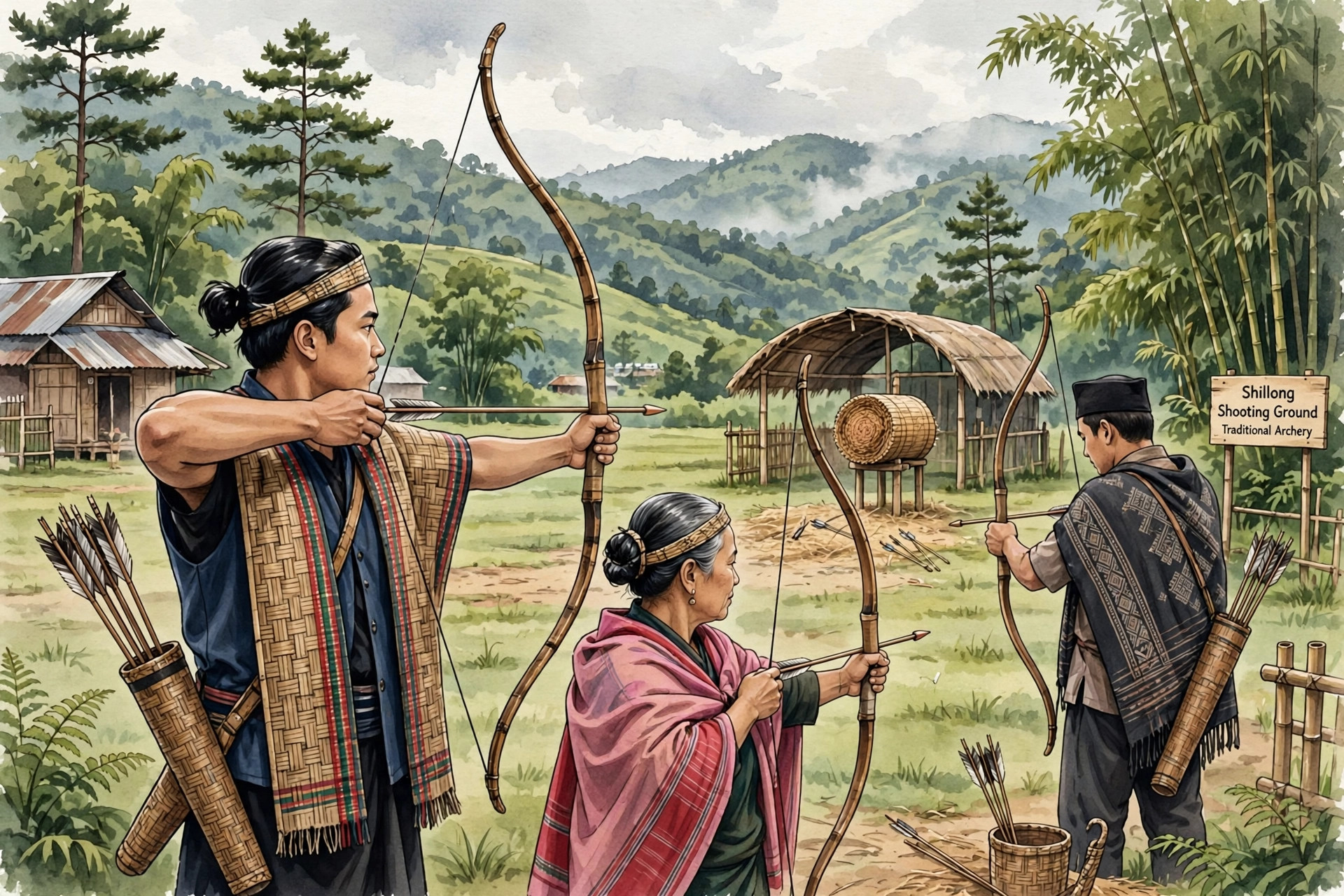
To understand a shillong teer previous result, you have to start with the bow. Long before there were result websites and archive pages, the Khasi people of Meghalaya practiced archery as a skill, a sport and a cultural marker. Archery contests drew crowds, celebrated marksmanship and bound communities together. Teer grew directly out of this heritage: the game keeps the archery contest at its heart and builds the lottery around what the archers actually do.
From Village Contests to an Organized Game
Traditional archery gatherings in the Khasi hills were social events. Archers from different localities would compete, spectators would gather, and the results of the shooting were simply a matter of pride. Over time, the idea of staking small amounts on the outcome took hold, and what had been pure sport gradually acquired the structure of a lottery. The state later brought this under a legal framework through the Meghalaya Amusement and Betting Tax Act, which is why teer operates openly in Meghalaya while similar number games remain underground elsewhere. Every shillong teer previous result you see in an archive is a descendant of those village contests: real arrows, real archers, a real count.
The Polo Ground: Where Shillong’s Results Are Born
The most famous venue associated with the game is the Polo Ground in Shillong, where the main archery sessions take place. Each playing day, groups of archers take their positions and shoot a fixed number of arrows at a cylindrical target. Officials count the arrows that strike the target, and the last two digits of that count become the declared number. The whole process happens in the open, in front of witnesses, which is part of why the game enjoys such deep public trust in Shillong. When you read a previous teer result from a past date, you are reading the outcome of arrows that flew at this ground on that day.
How Daily Record-Keeping Works in Shillong
Shillong’s teer record-keeping is a blend of old and new. The moment a round’s result is declared, it begins a journey from the ground to the counters to the archives, and each step is designed to keep the record accurate.
The Declaration Moment
After each round of shooting, officials tally the hits and announce the two-digit result. This declaration is the single source of truth for that session. Licensed teer counters across Shillong and beyond receive the declared number and post it for their customers, and result websites record it as the entry for that date and round. Because the declaration happens publicly, there is little room for dispute about what the number was; the record-keeping challenge is simply to carry it forward without transcription errors.
Counters, Clerks and the Daily Ledger
Walk into a licensed teer counter in Shillong on any playing day and you will see the human side of the archive. Counters display the current day’s result prominently, and many keep handwritten or printed ledgers of recent days so regular customers can check a previous teer result without a phone. These ledgers are the grassroots layer of the shillong teer result history. They are not as permanent as digital archives, but they are immediate, visible and trusted by the community that uses them every day.
From Counter Boards to Online Archives
Digital result sites took the counter-board tradition and made it permanent and searchable. Instead of a board that gets wiped clean for the next day, an online archive keeps every date in order, marks rest days, and lets anyone verify a shillong teer old result from weeks or months ago. Our Shillong Teer result archive follows this philosophy: entries stay in strict date order with both rounds shown, so the digital record mirrors the discipline of the best-run counters in Shillong.
A Shillong Teer Result History Through the Years
The shillong teer result history is best understood in phases. In the early decades, records were local and informal: counter ledgers, newspaper mentions and the collective memory of regular players. As the game grew under its legal framework, record-keeping became more systematic, with associations of counters standardizing how results were announced and preserved. The internet era then transformed access: suddenly anyone, anywhere, could look up a shillong teer previous result from any date without visiting a counter.
What has not changed across these phases is the underlying event. The archers still shoot, the officials still count, and the two-digit result still emerges from real arrows hitting a real target. That continuity is what gives the historical record its weight. A result from ten years ago and a result from yesterday were produced by the same ritual, which is why long-time followers treat the archive as a genuine chronicle of Shillong’s daily life rather than a mere list of numbers.
For broader context on the game’s origins, the Wikipedia article on Shillong traces how the archery lottery developed, and the Government of Meghalaya portal is the official source for the state’s regulatory framework.
Reading a Shillong Teer Previous Result the Local Way
In Shillong, people read result entries with a fluency that comes from daily practice, and their method is worth copying wherever you are.
Date First, Always
A Shillong regular never reads a number before confirming the date. Tickets are sold for specific dates and rounds, so the first question is always: which day is this entry for? Only after the date matches does the reader move to the round. This habit protects against the most common error of all, checking the right number on the wrong day.
FR Then SR, Like the Day Itself
The Shillong day of teer runs in a fixed order: the earlier session produces the First Round result and the later session produces the Second Round result. Archives preserve this order, so FR always comes before SR in a well-kept entry. Locals internalize this sequence the way you internalize reading left to right, and it means they never have to think about which column is which.
Rest Days Are Part of the Record
Sundays in Shillong are quiet for teer: no rounds, no results. Regulars do not find this confusing because the rest day is simply part of the rhythm. Good archives honor this by marking Sundays and public holidays explicitly. If you are browsing a shillong teer result list and see a marked gap, that is the archive telling the truth about a day when the archers rested, which is exactly what a faithful record should do.
The Teer Result Chart in Shillong’s Daily Life
The teer result chart has a special place in how Shillong follows the game. At counters and in tea shops, you will see monthly charts pinned up or shared on phones: grids of dates with FR and SR columns that let a whole month be scanned in seconds. These charts are compiled from the daily declarations, and their value is entirely in their accuracy. A chart with a single wrong entry can mislead everyone who reads it, which is why the counters that produce them take the transcription seriously.
For visitors trying to understand the culture, the chart is also a window into how seriously Shillong takes its records. The game matters enough to the community that its history is curated, debated and preserved with care. Our online Shillong Teer result chart archives aim to bring that same curatorial care to the digital format: strict date order, both rounds for every playing day, and clearly marked rest days.

Shillong, the City That Keeps the Game Honest
There is a reason the most trusted result sources identify themselves with Shillong. The city is where the archery happens, where the counters operate under license, and where thousands of eyes watch the daily ritual. This density of attention is itself a form of record-keeping: when a result is declared in front of a crowd and posted at hundreds of counters within the hour, altering it afterwards becomes practically impossible.
This is also why result sites based on Shillong’s records emphasize provenance. An entry in a shillong teer previous result archive is not a number someone typed from memory; it is the endpoint of a chain that runs from the shooting ground through the official declaration to the counter boards and finally to the digital page. When you check today’s Shillong Teer result on this site, you are looking at the newest link in that chain, recorded with the same care as every entry before it.
Visiting Shillong and Seeing Teer Culture Firsthand
If you ever visit Shillong, the teer culture is worth experiencing respectfully as part of the city’s life. The archery sessions are a genuine sporting spectacle, and the counters are ordinary neighborhood fixtures, not hidden operations. Watching a round gives you a visceral understanding of what every archived number represents: dozens of archers, hundreds of arrows, and a count performed in the open.
A few courtesies apply. Remember that the counters are workplaces; observe without getting in the way. If you want to participate, do so only through licensed counters, only if you are 18 or older, and only with money you can afford to lose. And if you are just curious, the archives on this site let you explore the shillong teer result history from anywhere in the world, which is the next best thing to standing at the ground.
Practical Tips for Using Previous Result Archives
Whether you are in Shillong or following from afar, these practices will make your use of previous result archives more reliable. First, always cross-check an important past result against a second source before acting on it; two independent archives agreeing is strong confirmation. Second, keep your own notes with full dates and round labels when you record numbers, so a later review does not depend on memory. Third, treat the archive as a record of what happened, not a guide to what will happen: every round is independent, and no reading of history changes the odds. Fourth, bookmark the pages you use most, including our homepage for the latest declaration and the archive for everything older. Finally, if something in an archive looks wrong, such as a date out of order or a round missing on a playing day, treat it as a flag to verify elsewhere rather than a fact to rely on.
The People Behind the Records
Behind every shillong teer previous result stands a chain of people, each with a role in keeping the record honest. The archers are the heart of it: skilled practitioners, many from families with generations of archery behind them, who shoot round after round with remarkable consistency. Their discipline is what makes the game possible at all, and in Shillong they are respected as sportspeople, not just as the source of a lottery number.
The officials come next. They supervise the shooting, oversee the counting of hits, and make the declaration that becomes the official result. Their presence at the ground, in full view of spectators, is the game’s built-in audit. When a previous teer result is later questioned, and that is rare, the answer always traces back to what the officials declared at the ground on that day.
Then there are the counter owners and their clerks, the licensed bookmakers who take the declared number and post it for the public. In Shillong, many counters have served the same neighborhoods for years, and their reputations depend on posting results quickly and accurately. A counter that posts a wrong number loses trust fast in a city where everyone checks. This social accountability is an underrated part of the record-keeping system: accuracy is enforced not only by rules but by reputation.
Finally there are the archivists, the people who maintain the ledgers, charts and websites where the shillong teer result history lives on. Whether it is a clerk updating a counter board or an editor publishing the day’s entry online, the archivist’s job is fidelity: copy the declared number exactly, date it correctly, and never alter it afterwards. When you open a shillong teer old result page and find the entries clean, ordered and complete, you are seeing the work of people who take that responsibility seriously.
Shillong Teer Previous Result – Frequently Asked Questions
Why is the game called Shillong Teer?
The game takes its name from Shillong, the capital of Meghalaya, where the main archery sessions are held and where the result record-keeping tradition is centered. “Teer” itself relates to the arrow at the heart of the game.
How many results does Shillong Teer produce each day?
Two: one for the First Round and one for the Second Round. Every shillong teer previous result entry for a playing day therefore contains two two-digit numbers, one per round.
Where do the archived numbers actually come from?
Each number is the last two digits of the count of arrows hitting the target in that round’s archery session in Shillong. The count is made publicly by officials, declared, posted at licensed counters, and then preserved in archives.
How far back can I check a shillong teer old result?
The game has run for decades, and online archives typically keep several months of daily entries in strict date order. Older records exist in counter ledgers and printed compilations. For most practical checks, a few months of archive depth is more than enough.
Are Sunday results ever declared?
No. Sunday is the regular weekly rest day for Shillong Teer, and no rounds are held. Public holidays in Meghalaya can also pause the game. Faithful archives mark these days instead of leaving gaps.
Can studying the shillong teer result history improve my chances?
No. Each round is an independent event, and the archers’ past counts do not influence future ones. History is valuable for verification and for appreciating the game’s tradition, not for prediction.
What makes one result archive more trustworthy than another?
Look for strict date order, both FR and SR fields on every playing day, explicitly marked rest days, prompt updates after each session, and consistency with other reputable sources. You can read how this site maintains its records on our about page.

Conclusion
A shillong teer previous result is more than a number on a screen: it is the recorded outcome of real archery in Shillong, carried from the shooting ground through licensed counters into archives that the city has kept with pride for decades. Read the entries the local way, date first and FR before SR, respect the rest days, and use the shillong teer result history for what it truly is: a faithful chronicle of Meghalaya’s most distinctive daily tradition. And whenever you engage with the game itself, do it legally, as an adult, and responsibly.
Responsible play note: Teer is a legal lottery in Meghalaya, operated under the state’s amusement and betting regulations. It is strictly for adults aged 18 and above. Play only through licensed counters, never spend more than you can afford to lose, and treat the game as entertainment, not income.