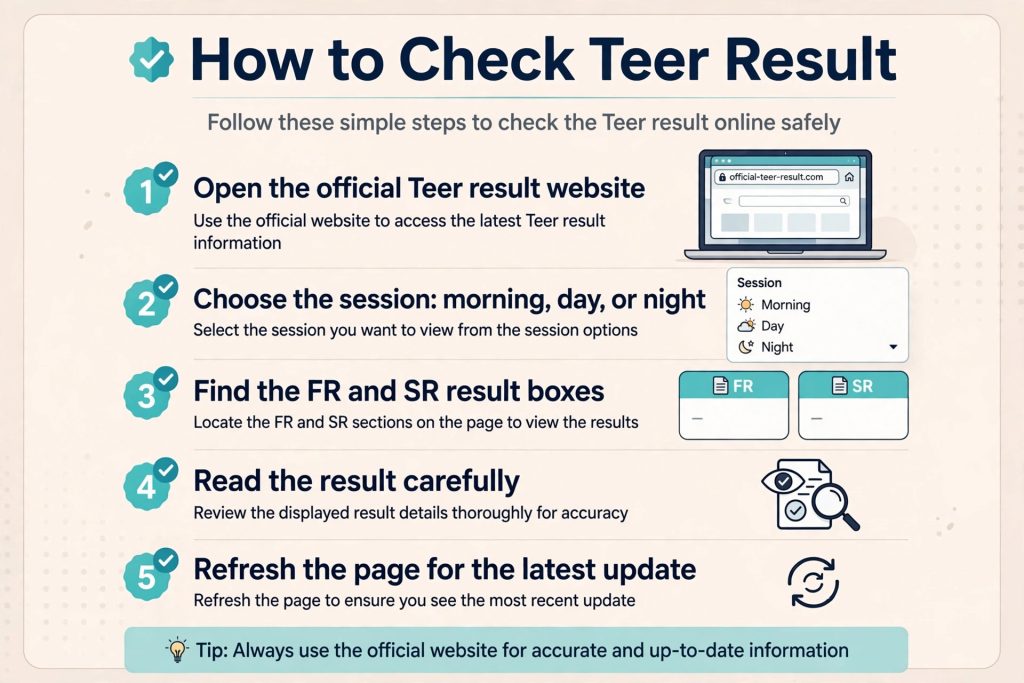
If you are new to the game, the first question you ask is usually how to check teer result without confusion, because the game runs in several sessions across Shillong, Juwai and Khanapara, and each session declares two rounds called FR and SR. This guide answers that question from start to finish with a Shillong-first perspective. You will learn what the game actually is, when each session declares its numbers, and then the exact steps to check any result on a phone or computer, read the result correctly, and avoid the fake or outdated pages that rank for the same searches. Every step here works for the flagship Shillong Teer game and applies just as well to the Juwai and Khanapara markets. For the daily updated numbers themselves, the Shillong Teer Result homepage carries the latest declarations in one place.
What the Shillong Teer Game Is
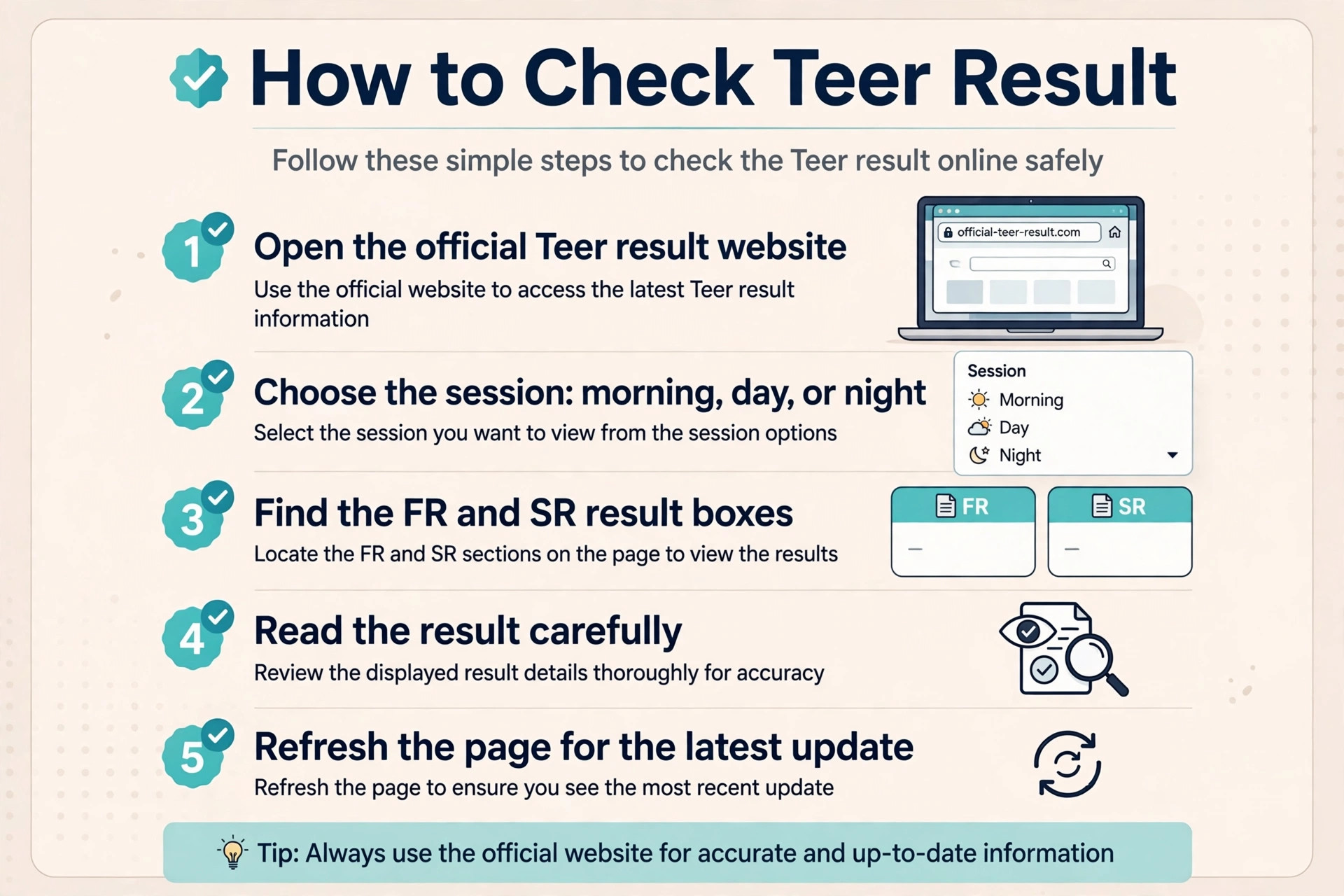
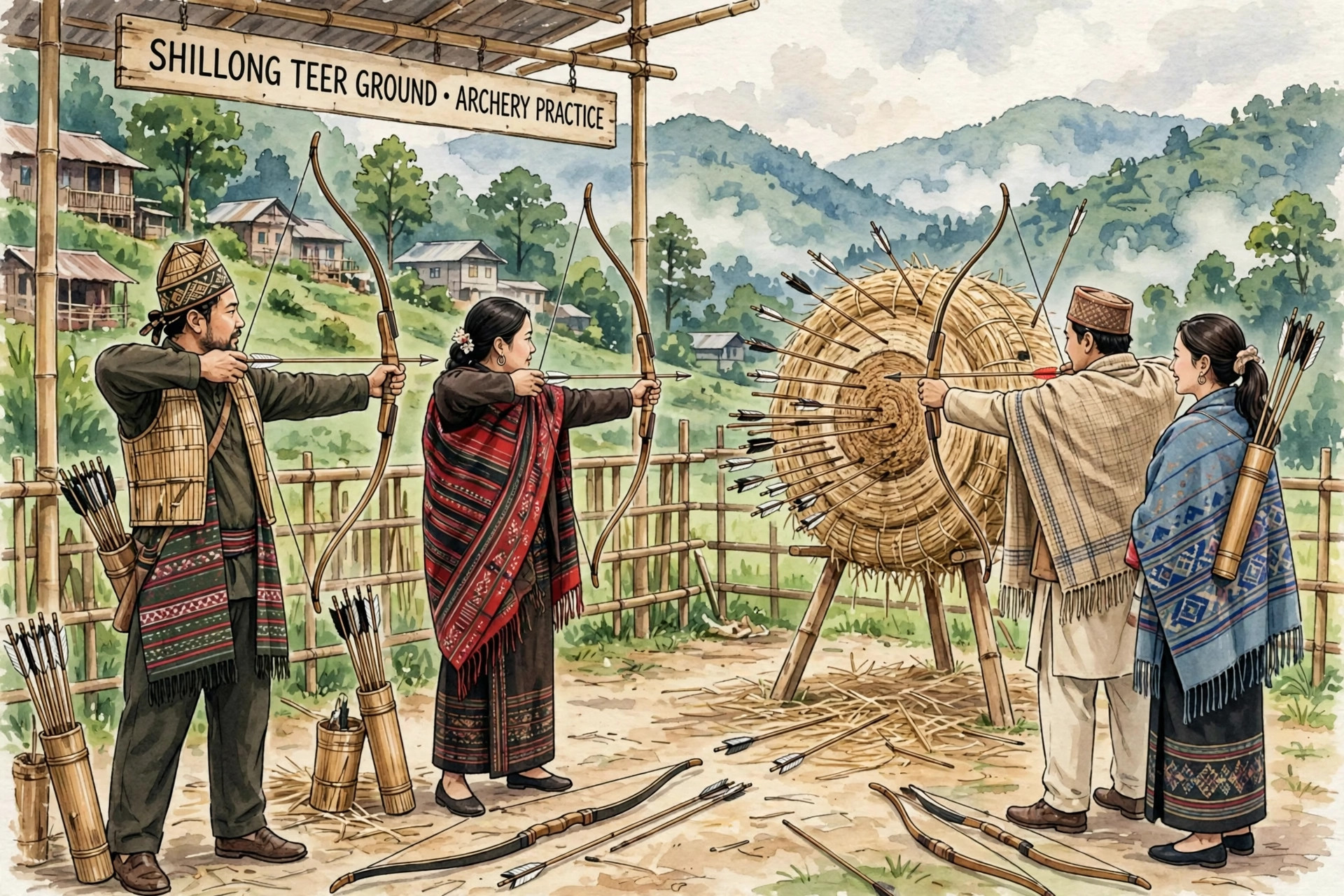
Before you check a result, it helps to understand what you are actually checking. Shillong Teer is a legal archery-based lottery game played in Meghalaya, India. Unlike lotteries that draw numbered balls from a machine, teer numbers come from real arrows. Every day, licensed archery clubs send teams of archers to a ground in Shillong, where they shoot a fixed number of arrows at a small target over two rounds. Officials count how many arrows hit the target in each round, and only the last two digits of that count become the winning number for the round.
Because the count can never have more than two digits in the published result, every teer result is a number between 00 and 99. That two-digit format is the first thing to recognise when you check. If a site shows you something that is not two digits, or a long string of numbers, you are not looking at a genuine teer result.
The game is rooted in Khasi archery tradition, which is why Shillong, the capital of Meghalaya, is the flagship venue. The state government regulates the game through the Meghalaya Amusement and Betting Tax (Amendment) Act, and it is a lottery open to adults aged 18 and above only. Teer is not betting advice territory and it is not a game of skill you can master with predictions. It is a legal lottery, and the responsible approach is to treat result checking as information, not as a signal to play. Play responsibly, and only if you are 18 or older.
Understanding FR and SR Before You Check
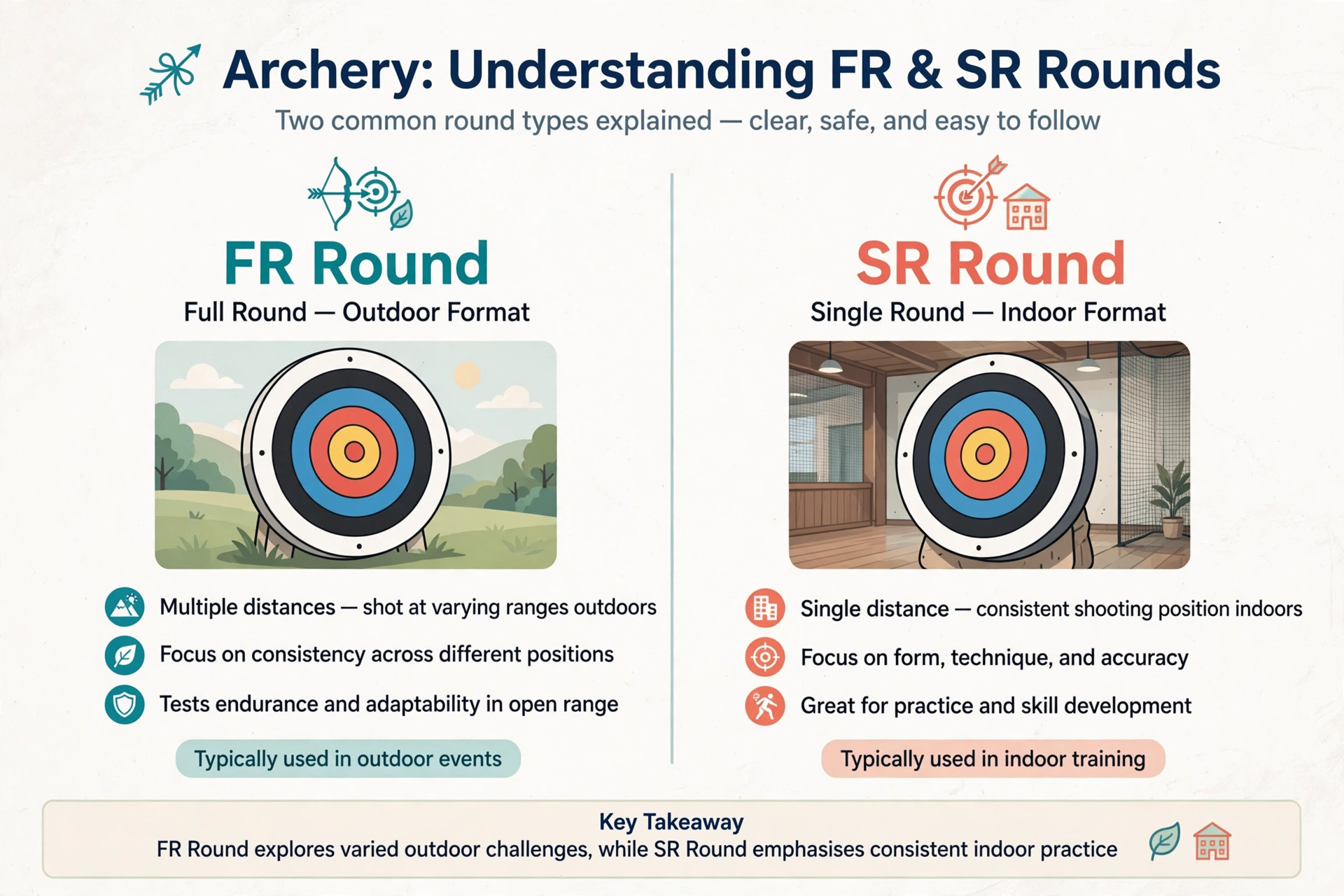
Every teer session has two rounds: FR (First Round) and SR (Second Round). The FR round is the first shooting round of the session, and its result is declared first. After a short gap, the archers shoot the second round, and the SR result is declared. You will see results published as FR and SR pairs, for example “FR – , SR – ” (the dashes are placeholders because we never publish or invent real numbers in an educational article like this).
Why does this matter for checking? Because many beginners see one number and think that is the whole result for the day. It is not. Each session produces two numbers. If you check too early, you may see only the FR number and the SR slot still blank or marked pending. That is normal. The SR number arrives later, and a reliable site updates the same page when it does. So the checking habit to build is simple: check once for FR, then check again later for SR, or wait until both rounds of the session you care about are declared.
The two-round structure is identical across Shillong, Juwai and Khanapara, which is why learning the checking steps once covers every market.
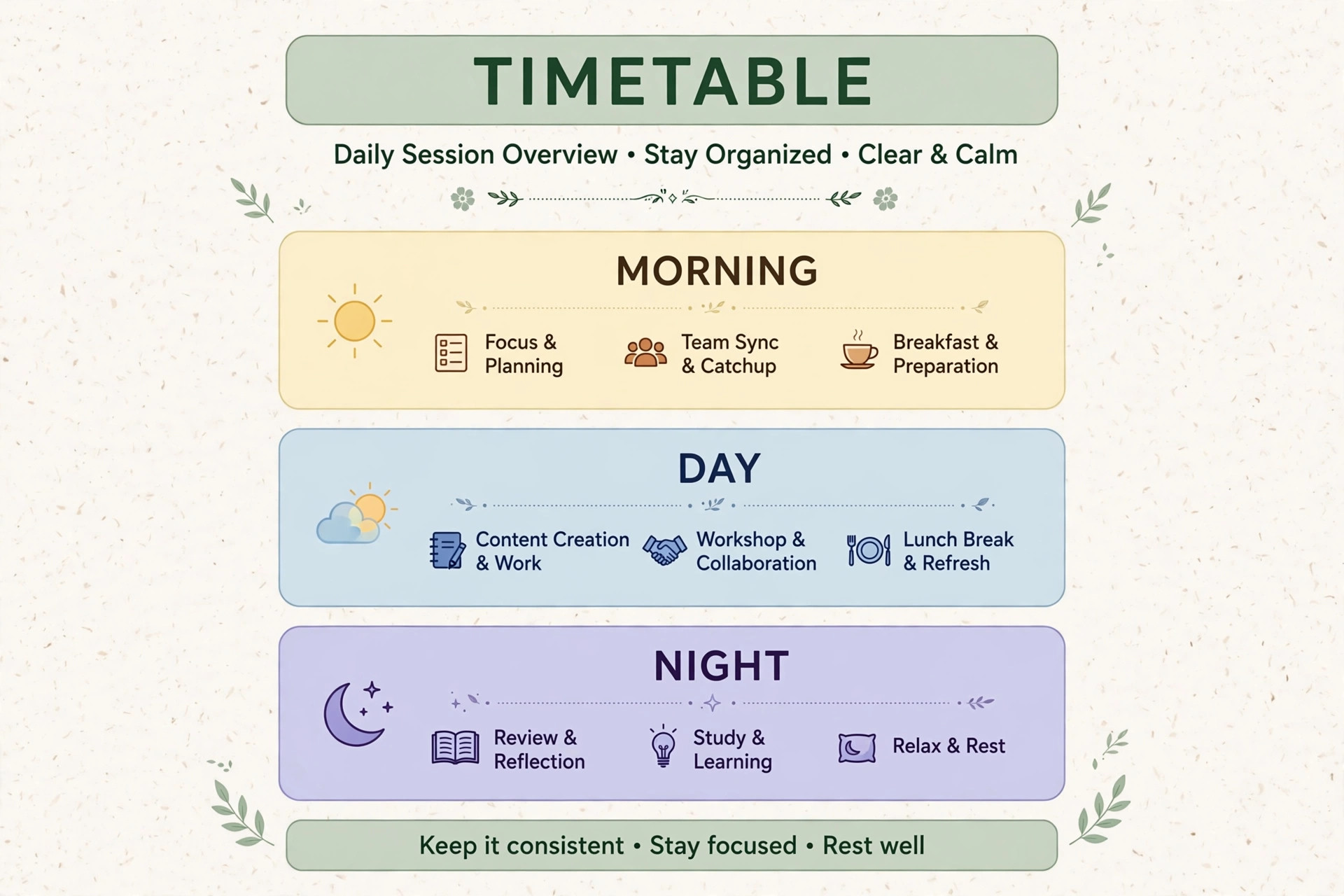
Session Timetable – When Results Come Out
Knowing how to check teer result is only half the job. The other half is knowing when to check. The game runs in morning, day (afternoon) and night sessions, and each has its own declaration window. Timings are approximate and can shift slightly with weather, crowd size or administrative decisions, so treat the windows below as typical rather than guaranteed. For exact live timing, the daily teer result list shows which rounds are declared and which are still pending.
Shillong Morning Teer
The morning session is the earliest game of the day. Archers complete the two morning rounds before midday, and the morning FR result is typically declared around the late morning, with the morning SR result following within the hour. If you want to check the morning result, plan your first check around the late morning and your second check roughly an hour later.
Shillong Day (Afternoon) Teer
This is the flagship session and the one most people mean when they say Shillong Teer. The afternoon game takes place in the mid-afternoon, with the FR result usually declared in the mid to late afternoon and the SR result following about an hour later. Traffic on result sites peaks during this window, so if a page loads slowly, that is often the reason.
Shillong Night Teer
The night session runs in the evening, with FR and SR results declared during the evening hours. It follows the same two-round pattern as the other sessions, and it is checked the same way. Night results are popular with players who missed the afternoon game.
Juwai and Khanapara Sessions
Juwai Teer (played in the Jaintia Hills region) and Khanapara Teer (associated with the Assam border area near Guwahati) run their own morning and afternoon sessions with the same FR and SR structure. Their declaration windows roughly overlap the Shillong pattern: morning rounds around late morning, afternoon rounds in the afternoon. Because the rounds and formats are identical, the checking steps below apply unchanged. If you follow the Juwai teer result page or the Khanapara page, you will see the same FR and SR layout.
A useful rule for all sessions: results are declared only on days the game is played. Sundays are typically a holiday for teer, and major public holidays can pause the game too. If you see no result on a Sunday, that is expected, not a site error.
How to Check Teer Result Online – Step by Step
Now the core of this guide. These steps work for Shillong morning, day and night sessions, and for Juwai and Khanapara too.
Step 1 – Pick a reliable result website
Start with a site that updates daily, shows the date clearly on every result, and separates FR and SR. A page that shows today’s date next to the numbers is far more trustworthy than one that just lists numbers with no date. This site, for example, structures its updates session by session so you can see at a glance which round has been declared.
Step 2 – Open the page for the session you want
Most good result sites organise results by session and market. If you want the flagship afternoon game, open the Shillong section. If you want the morning game, open the morning section. The Shillong teer result page keeps the flagship game separate from the other markets, which removes the most common beginner mistake: reading the Juwai number while thinking it is the Shillong number.
Step 3 – Confirm the date on the page
Before reading any number, check the date displayed next to it. Teer result searches often surface yesterday’s or last week’s pages, and reading an old result as today’s is the single most frequent error. A reliable page stamps every result with the date. If the date is not today, you are looking at an archive, which is fine for history but not for checking today’s game.
Step 4 – Read the FR number first, then the SR number
Find the FR slot and read it. Then find the SR slot. If SR is blank, pending, or shows a placeholder dash, the second round has not been declared yet. Do not assume a missing SR means the result is zero or cancelled. It simply means the archers have not finished the second round, or the counting is still being verified.
Step 5 – Recheck for the SR update
If you checked during the FR window, set a reminder to recheck about an hour later for the SR number. Most result sites update the same URL, so you can simply refresh the page. There is no need to search again or open a new site. Refreshing the same trusted page is the cleanest way to complete the pair.
Step 6 – Save or note the full pair with the date
When both rounds are in, note them together with the date and session, for example: “Shillong day session, today, FR and SR”. Writing the session and date down protects you from the classic mistake of mixing one day’s FR with another day’s SR. If you ever need to compare with an official counter or an archive, the date and session are what make the pair meaningful.
That is the whole process. Six steps, the same every day, for every session and every market.
How to Check Teer Result on Your Phone
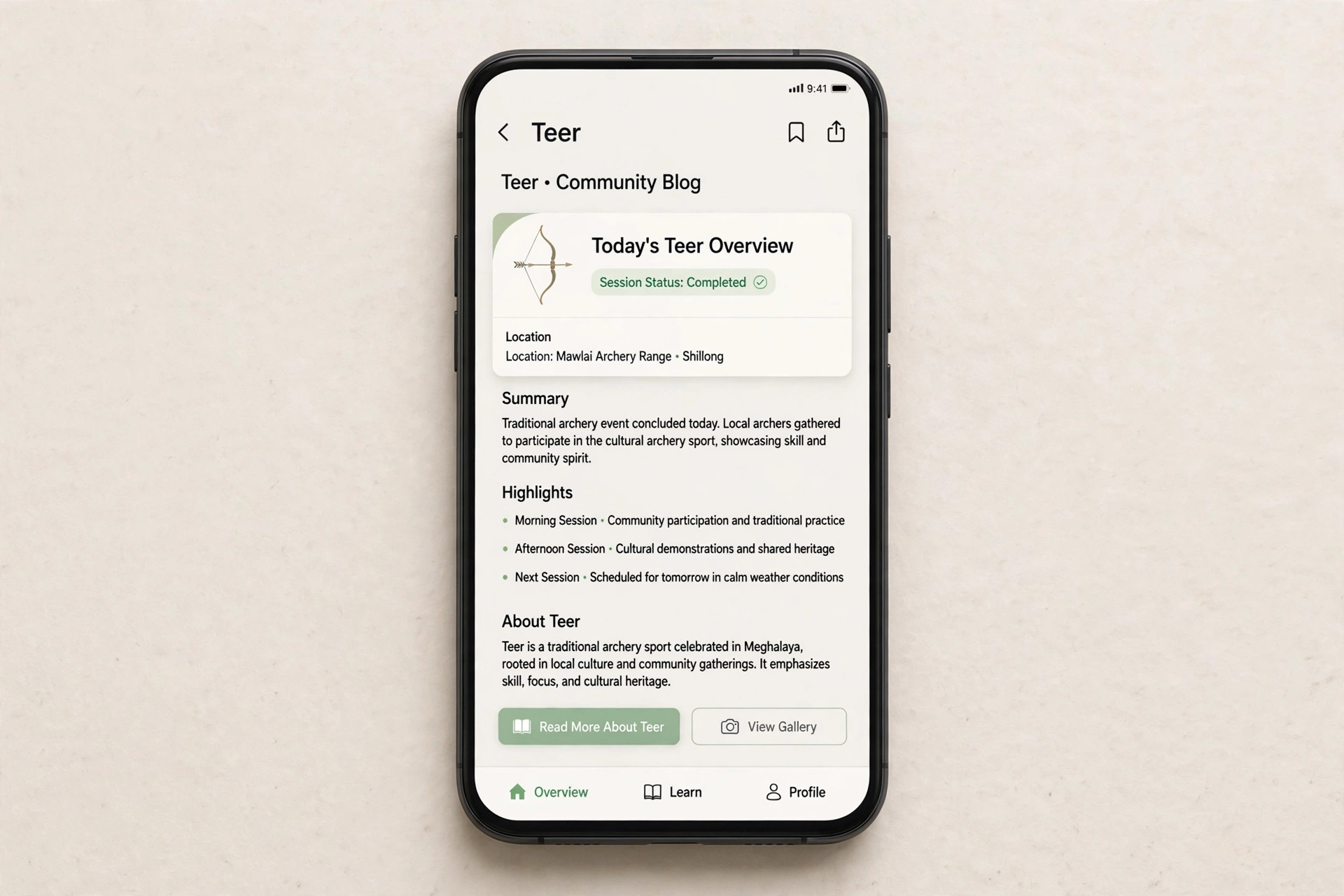
Most people check teer results on a mobile phone, often on a slow connection during the busy declaration window. A few habits make phone checking faster and more reliable.
First, bookmark the result page for your session instead of searching every time. Searching afresh each day is how stale pages sneak in, because search results do not always put today’s page first. A bookmark takes you straight to the live page.
Second, use your browser’s refresh rather than the back button. The back button can return a cached copy of the page from your earlier visit, showing you the FR number from this morning when you are actually trying to see the afternoon SR. Pull down to refresh (or tap the refresh icon) to force the latest version.
Third, if the page loads slowly during the peak declaration window, wait rather than hopping between sites. Heavy traffic slows result sites for a few minutes around declaration time. Opening five sites at once usually just shows you five slow pages and increases the chance you read numbers from different dates.
Fourth, check the date in the page header after every refresh. This single habit eliminates nearly every misread.
How to Check the Shillong Morning Teer Result
The morning session deserves its own note because it is easy to confuse with the afternoon game. When you check in the late morning, you are looking at the morning session page, not the main Shillong page. The result format is the same (FR then SR), but the numbers belong to a different game played by different archers earlier in the day.
A practical routine: do your morning check in two passes. First pass around the late morning for the morning FR, second pass about an hour later for the morning SR. Once both are noted, you are done with the morning game, and the afternoon session is still hours away. Never carry a morning number forward as if it belonged to the afternoon session. They are separate games.
How to Check the Shillong Night Teer Result
The night session works the same way, just later. Check once in the evening for the night FR, and again later for the night SR. Because night results come at the end of the day, beginners sometimes mix them with the next morning’s game. Keep the session label attached to every number you note: “night FR” is not “morning FR”. If you maintain the date plus session label habit from Step 6, this confusion disappears.
Night teer is also the session where fake early results spread most. If a social media post claims to show the night result hours before the evening declaration window, treat it as fake. Results come from the actual shooting rounds, and no one can know them before the archers shoot.
How to Check Juwai and Khanapara Results With the Same Steps
Once you can check Shillong, you can check the other markets, because nothing about the process changes. Juwai Teer runs in the Jaintia Hills and Khanapara Teer is associated with the Guwahati border region, but both use the identical FR and SR two-round format, the identical two-digit result format, and the same morning and afternoon session pattern.
The only real difference is which page you open. Open the Juwai page for Juwai results and the Khanapara page for Khanapara results, and apply the same six steps: reliable site, correct session page, confirm the date, read FR then SR, recheck for SR, note the pair with date and session. Market pages exist precisely so you never have to guess which number belongs to which game.
For a quick overview across all markets in one view, the site’s daily teer result list page is the fastest single page to check when you follow more than one game.
How to Read a Teer Result Card Correctly
A typical result card shows four things: the market name (Shillong, Juwai, Khanapara), the session (morning, day/afternoon, night), the date, and the FR and SR numbers. Read it in this order: market, session, date, then numbers. That order is your verification chain. If any link in the chain is wrong, the numbers are meaningless to you.
Watch for these common misreads:
A number without a date is not a result you can use. It might be an example, an old result, or a placeholder. In educational articles like this one, you will see placeholders such as “-” where a number would go. That dash means “example only, not a real result”. Never treat a placeholder as a declared number.
A single number shown alone is only half a result. A complete result for a session is always the FR and SR pair together.
A result labelled with the wrong session name is a different game. Shillong morning FR and Shillong day FR are not interchangeable.
A screenshot of a result card shared on social media may be cropped to hide the date. Always verify against a dated page on a proper result site before trusting a screenshot.
Where the Numbers Come From – Archery Grounds and Counting
Understanding the source of the numbers helps you judge which sites to trust. On game days, archers gather at the licensed ground in Shillong (and at the respective grounds for Juwai and Khanapara). They shoot a set number of arrows at the target across two rounds. Officials count the arrows that hit the target. The last two digits of the hit count in round one become the FR number, and the last two digits of the hit count in round two become the SR number.
This is why results cannot appear before the rounds are shot, and why there is always a gap between FR and SR. The counting and verification take time. Any site or message claiming to publish the result before the shooting round has happened is not showing a real result.
The state government of Meghalaya oversees this legal lottery framework. You can read about the broader context of the game on the Shillong article on Wikipedia, and the Meghalaya government portal is the official source for state information. Neither of these publishes daily results; they exist so you can verify that the game is a real, regulated activity and not an internet invention.
Checking Previous Day and Old Results
Sometimes you need yesterday’s result or an older one, perhaps to settle a question about which pair was declared. The checking process is the same, but the page is different. Use the archive or result list page rather than today’s page, and be extra careful with the date, because archive pages show many dates at once and it is easy to read the wrong row.
When reading an archive, keep one finger (mentally) on the date column and one on the session column, then read across to FR and SR. The result list page keeps past results organised by date, which makes this cross-checking straightforward. Remember the archive is for reference only. Old results do not influence future results, because each round is a fresh shooting event.
What to Do If a Result Is Delayed
Delays happen. Heavy rain in the Khasi Hills can slow the archery rounds, large crowds can slow the counting, and technical issues can slow the websites. Here is how to handle a delay calmly.
First, do not assume the game is cancelled. A late result is usually just late. Second, refresh your trusted page rather than switching to an unknown site. During delays, opportunistic pages publish invented numbers to capture traffic, and switching sites is exactly how you end up reading a fake. Third, check whether other sessions are also delayed. If the whole day’s schedule is running late, the pattern confirms a genuine delay rather than a problem with one page. Fourth, if the result still has not appeared well past the usual window, check the next day. On rare occasions a session is postponed, and the archive will show a gap or a note for that date.
The golden rule of delays: a blank or pending slot on a trusted dated page is always more honest than a confident number on a page you have never seen before.
How to Check Teer Result Without the Internet
Not everyone is online at declaration time, and in parts of Meghalaya the mobile network can be patchy during the busy window. The traditional offline method still works: licensed teer counters display the declared results on boards, and local newspapers in Shillong publish the previous day’s results.
If you check at a counter, apply the same discipline as online: confirm the date written on the board, confirm whether the board shows FR, SR or both, and make sure you are reading the board for the right market and session. Counters in Shillong display Shillong results; a counter near the Assam border may display Khanapara results. The market and session labels matter offline exactly as much as online.
One caution for offline checking: word of mouth is the least reliable channel. A number heard secondhand, without a date or session attached, is not a checked result. Verify it against a board or a dated page before acting on it.
Spotting Fake Result Sites and Staying Safe
Because teer result searches carry heavy traffic, they attract copycat sites. Here is a quick safety checklist.
Be suspicious of any site that asks you to download an app, pay a fee, or create an account just to see a result. Genuine result checking is free and needs no account.
Be suspicious of sites with no date on their results. A dateless number cannot be verified and is often recycled from an old declaration.
Be suspicious of sites that publish “results” far ahead of the declaration windows described above. As established, numbers come from real shooting rounds. Early numbers are invented.
Be suspicious of prediction content dressed up as results: pages promising “sure numbers”, “common numbers”, “hit numbers” or “target numbers” for today or tomorrow. This site does not publish predictions, and you should treat any site that does as entertainment at best and a scam at worst. No one can predict how many arrows will hit a target before the round is shot.
Finally, keep your device safe. Do not install result apps from outside official app stores, and do not grant notification or SMS permissions to random result sites. A bookmarked web page is safer than a sketchy app.
A Note on Responsible Play
Teer is a legal lottery in Meghalaya, regulated by the state government, and participation is strictly for adults aged 18 and above. This article is an educational guide about how to check results, not an encouragement to play. If you do participate, set a strict budget you can afford to lose, never chase losses, and never borrow money to play. Lottery games are entertainment with a cost, and no checking strategy or number pattern changes the odds of a fresh round. If playing stops being fun, stop playing. Keep result checking as what it should be: simple information, checked correctly.
Frequently Asked Questions
What is the fastest way to check teer result online?
The fastest reliable way is to bookmark the result page for your session and refresh it during the declaration window. Searching fresh each day is slower and risks landing on a stale or fake page. A bookmarked dated page with FR and SR slots, refreshed at the right time, is both the fastest and the most accurate method.
How do I know whether a teer result is for today?
Check the date printed next to the result on the page. Every trustworthy result site stamps each result with its date. If the date is not today, you are looking at an archive. Search engines sometimes rank older pages highly, so the date check is essential every single time.
Why is only the FR number showing and not the SR number?
Because the two rounds happen at different times. The FR result is declared after the first shooting round, and the SR result comes after the second round, usually about an hour later. A blank or pending SR slot is normal during the gap. Refresh the same page later instead of searching for the number elsewhere.
Can I check Shillong, Juwai and Khanapara results on the same site?
Yes. The game format is identical across all three markets, so one site can carry all of them as long as each market and session has its own clearly labelled section. Always confirm the market name and session before reading the numbers, so you never mix a Juwai number with a Shillong number.
Is there an official government website for daily teer results?
The Meghalaya government regulates the game, and you can read official state information on the Meghalaya government portal, but daily results are published by licensed counters and result websites, not on a single government results page. Use a reputable dated result site for the daily numbers and the government portal for regulatory context.
What should I do if the result seems delayed?
Wait and refresh your trusted page. Delays from weather, crowds or technical issues are common and usually resolve within the day. Do not switch to unknown sites during a delay, because that is when invented numbers spread most. If the session is postponed, the archive will show the gap the next day.
Conclusion
Learning how to check teer result comes down to a short, repeatable routine: use a trustworthy dated site, open the right market and session page, confirm the date, read FR then SR, recheck for the second round, and note the pair with its date and session. The routine is the same for Shillong’s morning, day and night sessions and for Juwai and Khanapara, because the game itself is the same everywhere: real archers, two rounds, two-digit numbers. Check at the right time, ignore predictions and early numbers, and keep play responsible and 18 plus. Once the habit is in place, you will never misread a result again.