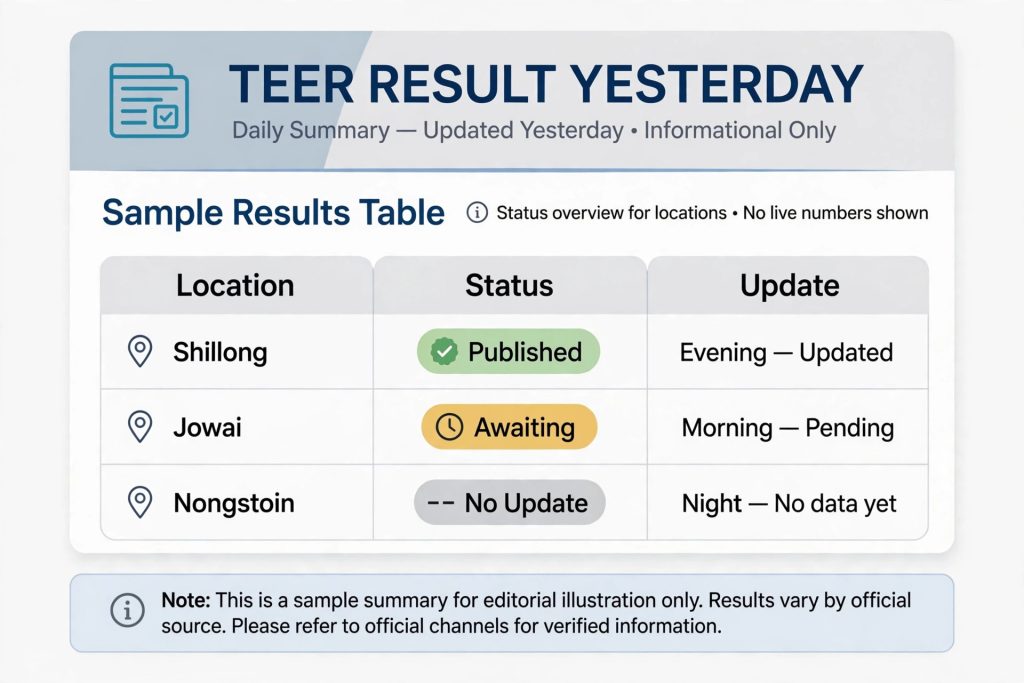
Yesterday’s teer result is one of the most searched teer phrases every single day, and the reason is simple: thousands of players miss the live moment and need to confirm what happened after the arrows flew. The phrase teer result yesterday covers yesterday teer result searches for every market, but nowhere is it searched more often than for Shillong. This guide takes you deep into yesterday’s Shillong teer, explaining the game across all its sessions, the morning, day and night rounds, the archery tradition at Shillong’s famous Polo Ground, how the first round and second round numbers are produced, when each session’s result is declared, and exactly where yesterday’s Shillong numbers sit inside the archive. Whether you missed a day or you simply want to understand the game properly, you will find everything here in one place.
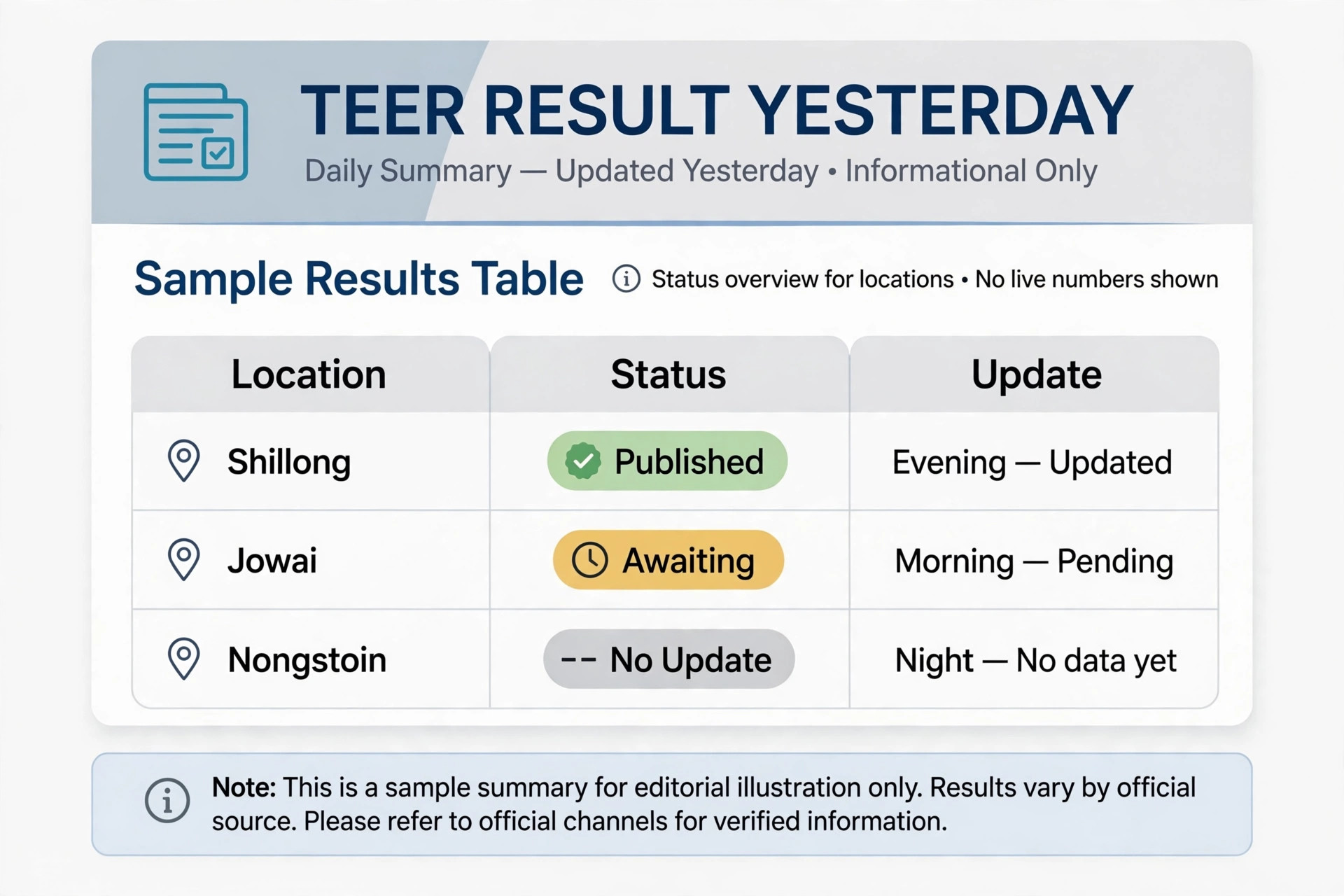
Why Everyone Searches for Teer Result Yesterday
The search for teer result yesterday never really stops. Teer is a daily game, and life is busy, so many players check the outcome a day later rather than watching the declaration happen live. For these players, the archived result is not old news. It is the only way to settle a bet, update a personal record book, or simply satisfy the curiosity of what the numbers were. Most teer result sites therefore keep a full history going back many weeks, and that history is what makes the yesterday teer result phrase so useful.
There is also a practical side. Many players keep handwritten notes or small spreadsheets of past results, and they cross-check the official announcement against what they recorded. If you played a number yesterday, the only number that matters today is yesterday’s. That is why yesterday teer result pages get steady traffic all day long, from early morning until late at night.
On this site, the teer result list keeps recent results organized by date, so you can scroll back and find yesterday’s Shillong, Juwai and Khanapara numbers without hunting around. The rest of this article explains what those entries actually mean and how to read them like an experienced player.
The Roots: Shillong’s Archery Tradition at the Polo Ground
You cannot really understand the Shillong teer result yesterday without knowing where it comes from. Teer began as an archery contest, and in Shillong it still is one. Every afternoon, weather permitting, archers gather at the Polo Ground in Shillong, the capital of Meghalaya, and shoot arrows at a bamboo target in the traditional Khasi style. The Meghalaya state government regulates teer as a legal lottery, which is what makes this open-air archery competition into the teer game that millions follow. You can read more about the state that hosts this tradition on the official Meghalaya government portal, which covers the legal framework that keeps teer running openly and fairly.
Archery itself is far older than the lottery. It is one of humanity’s oldest skills, used for hunting and sport across every continent, and the traditional form of it is described well in the archery article on Wikipedia. In Meghalaya, the Khasi people have practised archery for centuries, and their tournaments were social events long before anyone thought of attaching numbers to them. The modern teer game simply took that existing tradition and added a lottery layer on top: spectators buy tickets bearing two-digit numbers, the archers shoot, the number of arrows that strike the target is counted, and the last two digits of that count decide the winning number.
From Tribal Sport to Regulated Lottery
The transformation from village sport to organized game happened gradually. In the early days, archery betting was informal and unregulated. Then the Meghalaya government stepped in with the Meghalaya Amusement and Betting Tax Act and the rules framed under it, which licensed teer counters and the archery associations that run the shoots. Today, licensed teer clubs and counters operate openly in Shillong and across the state. Players buy tickets from authorized counters, each ticket printed with a chosen number from 00 to 99, and the associations conduct the archery rounds at the designated ground at fixed times.
This regulation matters for anyone searching for yesterday’s result. Because the game is official, the declaration follows a fixed daily rhythm, the counting is witnessed, and the announced numbers are final and public. There is no mystery about how the result came to be. It came from real arrows, real targets and real archers at the Polo Ground.

How Shillong’s Two Rounds Create FR and SR Numbers
Every teer session, whether morning, day or night, consists of two shooting rounds. This is why you always see two numbers for each session: the first round number, written FR, and the second round number, written SR. Understanding these two rounds is the key to reading any result, including yesterday’s.
The First Round
The first round is the main event. A fixed number of archers, often around fifty, line up and each shoots a set number of arrows at the target. In the traditional format each archer shoots thirty arrows, so the maximum possible count runs into the thousands, though the actual number that hits the target is far lower. Once every archer has finished shooting, officials count the arrows stuck in the target. The total count is what matters, and the winning number is the last two digits of that total. So if the count comes to a figure ending in, say, the digits 2 and 8, the FR result for that session would be a two-digit number ending in those digits. This is an example only, not a real result. The exact number is whatever the count produces, never decided in advance.
The Second Round
After a short break, the archers shoot again, and this time the format is slightly different. Fewer archers take part and each shoots fewer arrows, so the second round is shorter. The counting works exactly the same way: the officials count the arrows that hit, take the last two digits of the total, and that becomes the SR result for the session. Because the conditions change, the SR number is independent of the FR number. You should never assume that yesterday’s FR tells you anything about what yesterday’s SR was. They come from two separate rounds of shooting.
Where Arrows Meet Numbers
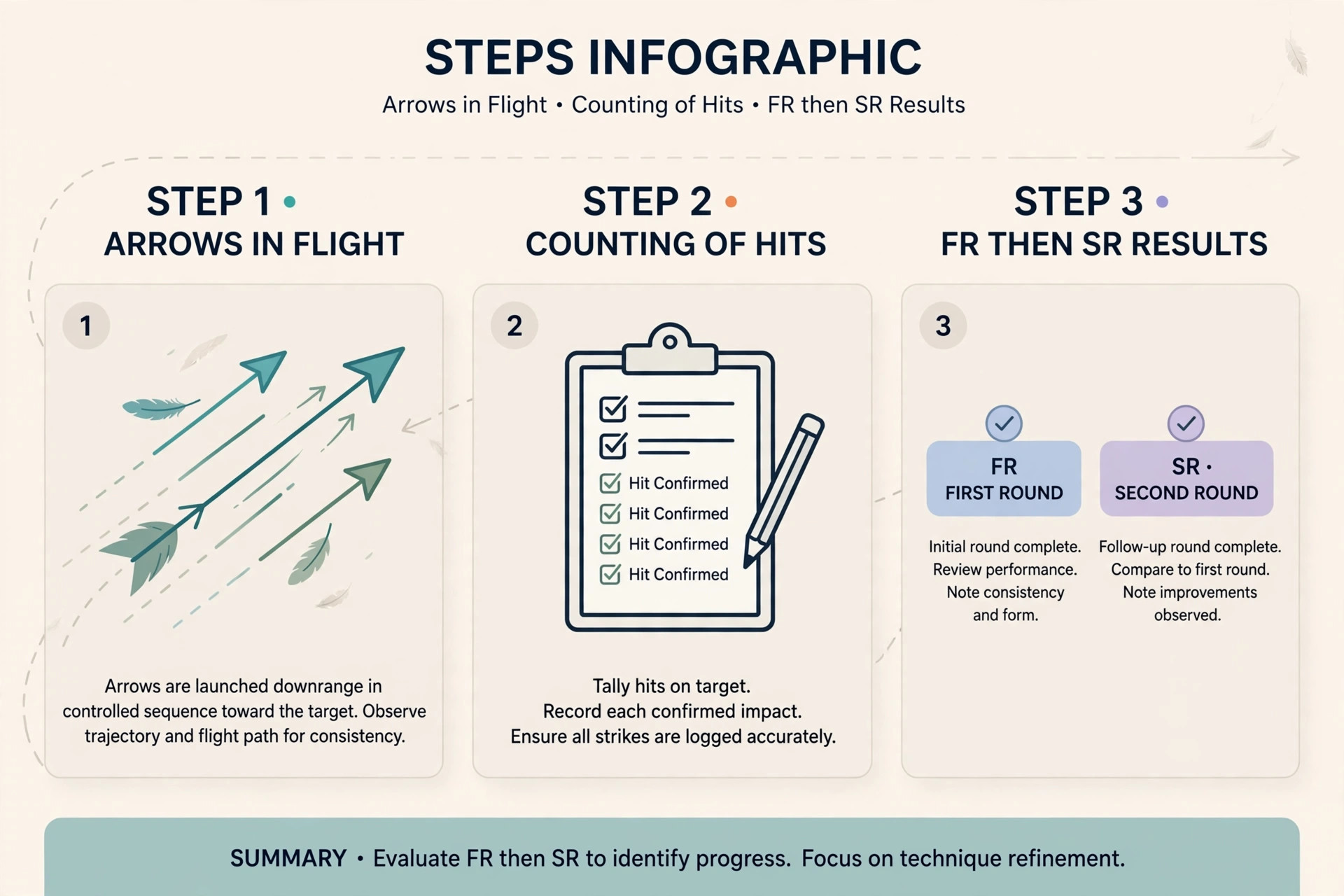
One point confuses many newcomers: why does the result depend on a count instead of on who won the archery? The answer is that teer is a hybrid. The archers are genuinely competing as archers, and the shooting is real, but the lottery layer uses the hit count as its random number generator. Nobody, not even the archers, can predict or control the exact count, because hundreds of arrows fly and small differences in wind, light and aim change the total every time. That unpredictability is exactly what makes the game fair as a lottery.
Teer Result Yesterday – Yesterday’s Shillong Sessions in Full Detail
Now to the heart of the matter: what does the teer result yesterday actually contain for Shillong? Each day, Shillong teer runs three separate sessions, and every session produces its own FR and SR numbers. So yesterday’s complete Shillong picture is not one number or even two. It is six numbers: FR and SR for the morning session, FR and SR for the day session, and FR and SR for the night session.
Shillong Morning Teer
The morning session is the earliest of the three. Archers shoot in the morning hours, and the two rounds are declared roughly an hour apart. Morning teer tends to attract a dedicated crowd of early players, and its results are settled well before midday. When you look at yesterday’s entry for the morning session, you will see two numbers, the morning FR and the morning SR. These numbers come from the morning archery rounds only and have no connection to the later sessions.
Shillong Day Teer
The day session is the one most people mean when they say “Shillong teer.” It is the classic afternoon game at the Polo Ground, and it draws the largest number of players. The first round is shot in the afternoon, followed by the second round a little later. Yesterday’s day session FR and SR are the numbers most often searched for under shillong teer result yesterday, because the day game is the flagship event of the teer calendar. If a friend asks “what came yesterday,” they almost always mean the day session.
Shillong Night Teer
The night session is the newest addition to the Shillong lineup and gives evening players their own game. The archery rounds take place in the evening, and both rounds are declared before the night is over. Yesterday’s night session FR and SR complete the daily set of six. The night game follows exactly the same rules as the other two sessions: licensed counters, two rounds, last-two-digits counting, and an official declaration.
Between the three sessions, yesterday’s Shillong teer produced six official numbers, all from real archery, all declared publicly, and all preserved in the archive. The next section explains when each of those declarations happens, so you know the daily rhythm.

When Each Shillong Session’s Result Is Declared
Teer runs on a timetable, and the timetable barely changes from day to day. Knowing the schedule helps you understand why the result archive is organized the way it is, and it tells you exactly when you can expect each session’s numbers to appear. All times below are approximate Indian Standard Time, and minor day-to-day shifts are normal, so treat them as the usual rhythm rather than a promise to the minute.
- Shillong Morning FR: around mid-morning, with the second round following about an hour later.
- Shillong Morning SR: late morning, roughly an hour after the morning FR.
- Shillong Day FR: mid-afternoon, the flagship round at the Polo Ground.
- Shillong Day SR: late afternoon, roughly an hour after the day FR.
- Shillong Night FR: evening, the opening round of the night session.
- Shillong Night SR: later in the evening, closing out the day’s teer.
There is one more timing detail worth knowing. Teer does not run on Sundays. The archers, the counters and the associations all take the day off, so there is no yesterday teer result to look up on a Monday morning for Sunday’s play, because Sunday never had one. On every other day of the week, all three sessions run and all six numbers are declared.
Where Yesterday’s Shillong Numbers Sit in the Archive
The archive is simply the list of past results in date order, and on this site it lives on the teer result list page. Each dated entry shows the date, the session names, and the FR and SR numbers for each session. To find yesterday’s numbers, you look for the row dated with yesterday’s date and read across: morning FR and SR, day FR and SR, night FR and SR. The archive is kept for many weeks back, so you can scroll further to compare yesterday’s numbers with last week’s if you like.
How the Archive Entries Are Organized
Archive entries are organized newest first. Today’s in-progress entries sit at the top while the day’s sessions are still being declared, and yesterday’s complete entry sits just below them with all six Shillong numbers filled in. If you open the list in the morning, yesterday’s row will already be complete, because every one of yesterday’s sessions finished the previous evening. That is the beauty of the yesterday teer result lookup: unlike today’s live page, which fills in gradually, yesterday’s entry is always finished.
Reading an Archived Entry
An archived entry uses a simple layout. You will see the date at the top, then each session listed with its two numbers. The numbers are always two digits, written with a leading zero when needed, so a result of five is shown as 05. Placeholders such as a dash may appear for sessions that have not been declared yet on the current day, but yesterday’s row will never show placeholders, because every session from yesterday is long since complete. If you ever see a dash in yesterday’s row, that is a formatting slip, not a missing result, and it is worth reporting to the site.
What About Yesterday’s Juwai and Khanapara Results
This article focuses on Shillong, but the yesterday teer result search usually includes the other two big markets, so here is the short version. Juwai teer, played in the town of Jowai in the Jaintia Hills, runs its own morning and day sessions with the same two-round FR and SR format. Its declaration times are close to Shillong’s but not identical. You can find yesterday’s numbers on the Juwai teer result page, which keeps the same date-ordered history as the Shillong page.
Khanapara teer, played at Khanapara near Guwahati on the Assam border, is the third major market. It runs morning and day sessions too, with the same FR and SR structure. Yesterday’s Khanapara numbers are on the Khanapara teer result page. Because Khanapara sits on the Assam side, it is the market most Assam-based players follow, but the rules of the game are identical to Shillong’s.
A quick word of caution: never mix the markets. Yesterday’s Shillong day FR and yesterday’s Juwai day FR are completely different numbers from completely different archery grounds. Always check that you are reading the right market’s column before you settle anything.
How to Read a Yesterday Teer Result Table
If you are new to teer result pages, the table layout can look cryptic at first. Here is a step-by-step way to read it.
Step 1 – Find the date. Confirm the row you are reading is dated with yesterday’s date, not today’s.
Step 2 – Find your session. Make sure you are looking at the morning, day or night row that matches the game you played.
Step 3 – Read FR first. The first number listed for the session is the first round result.
Step 4 – Read SR second. The second number is the second round result.
Step 5 – Check the digits. Each number is two digits from 00 to 99. If your ticket number matches, compare digit by digit.
That is all there is to it. The table never contains anything else: no codes, no hidden meanings, no extra columns. Anyone offering you a more complicated reading is selling you something, so keep the interpretation simple.

Shillong Teer Culture – Beyond the Numbers
The yesterday teer result matters to players, but the game matters to Shillong in a much bigger way. Teer counters are part of the city’s street life, the Polo Ground shoots are a daily spectacle, and the archery associations are community institutions. For many Khasi families, archery is a skill passed down through generations, and teer keeps that skill alive and funded. The licensing fees and taxes paid by the teer system flow back into the state, which is one reason the government regulates the game rather than banning it.
There is also a social side that outsiders often miss. The counters are neighborhood meeting points where people gather, talk and watch the results come in. The daily rhythm of the declarations gives the day a structure, a little like the way a cricket score gives shape to an evening. When you check yesterday’s numbers, you are tapping into a tradition that is woven into the everyday life of the hill capital.
A Note on Responsible Play
Teer is a legal lottery in the state of Meghalaya, regulated under the state’s betting and amusement laws, but legality does not make it risk-free. The game is strictly for adults aged 18 and above, and players are expected to play responsibly. Set a budget before you visit a counter, never chase losses, and treat teer as entertainment, not as a way to make money. If playing ever stops being fun, step away. This site publishes results for information only and never encourages anyone to bet beyond their means.
Frequently Asked Questions
What is the teer result yesterday for Shillong?
Yesterday’s Shillong result is the complete set of six official numbers from the previous day: FR and SR for the morning session, FR and SR for the day session, and FR and SR for the night session. You can find them in date order on the teer result list page. Note that this article is evergreen and does not republish specific numbers, since official results change every day. Always check the live result page for the actual numbers.
Why do people search for yesterday teer result instead of today’s?
Most players search for yesterday teer result because they missed the live declaration and want to confirm the outcome after the fact. Others keep personal records of past results and cross-check them against the official announcement. Yesterday’s entry is also convenient because it is always complete: all sessions have finished, so there are no pending or placeholder values to wait for.
How many numbers make up yesterday’s Shillong teer result?
Six numbers in total. Shillong runs three sessions a day, morning, day and night, and each session has two archery rounds producing a first round number and a second round number. So yesterday’s full Shillong picture is morning FR and SR, day FR and SR, and night FR and SR, all declared from real archery at the Polo Ground.
What is the difference between FR and SR in yesterday’s result?
FR is the first round number and SR is the second round number. They come from two separate rounds of archery shooting within the same session. In the first round, more archers shoot more arrows; in the second round, fewer archers shoot fewer arrows. The hit count of each round is counted separately, and the last two digits of each count become that round’s number. The two numbers are independent of each other.
Are yesterday’s Shillong, Juwai and Khanapara results the same?
No. Each market runs its own archery at its own ground with its own archers, so yesterday’s numbers for Shillong, Juwai and Khanapara are all different. Always make sure you are reading the correct market’s column or page before comparing a ticket. Mixing markets is one of the most common beginner mistakes.
Is there a teer result on Sunday to check as yesterday’s?
No. Teer does not run on Sundays in Meghalaya. The archery associations, counters and officials all rest, so no sessions are held and no numbers are declared. If yesterday was a Sunday, there is no result to look up. The game resumes on Monday with the normal morning, day and night schedule.
Conclusion
The search for teer result yesterday is really a search for certainty: what happened, when, and where to confirm it. For Shillong, the answer is always six numbers from three sessions of real archery at the Polo Ground, each session producing its own FR and SR through the first and second shooting rounds. The declarations follow a fixed daily rhythm from morning to night, Sundays are off, and the archive keeps every entry in date order so yesterday’s complete picture is always one scroll away. Now that you understand the sessions, the rounds and the schedule, you can read any result table, today, yesterday or last month, with total confidence. For the latest numbers, head to the Shillong Teer Result homepage and check the result list for the date you need.