
Meghalaya teer is one of the most unusual legal lotteries in India, because it grew out of a centuries-old archery tradition rather than a paper draw. Every working day in Shillong, dozens of archers gather at a large ground, take aim, and release their arrows, while thousands of ticket holders wait to learn the last two digits of the arrows that hit the target. What looks from the outside like a simple betting game is actually the end point of a long journey through custom, prohibition, and finally law. This article traces how Shillong became the home of teer, how the state of Meghalaya chose to regulate rather than ban it, and what the rules mean for anyone who takes part today.
Shillong, the Home of Meghalaya Teer
Ask anyone in Northeast India where teer belongs and the answer comes back instantly: Shillong. The state capital of Meghalaya is the beating heart of this lottery, the place where its rules were written, where its archers shoot, and where its counters cluster. Understanding meghalaya teer properly means understanding Shillong itself, a hill city where archery is not a sport imported from elsewhere but a living part of Khasi culture.
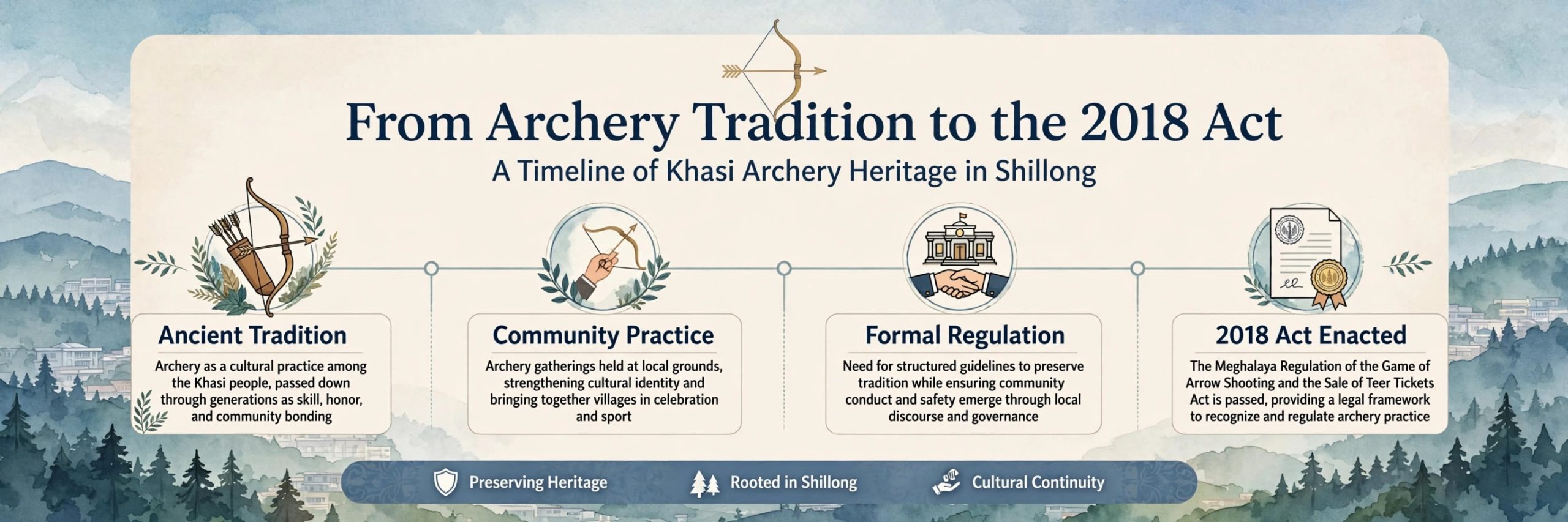
The Khasi Archery Tradition
Long before teer existed as a lottery, archery was woven into the daily life of the Khasi people of the Khasi Hills. The bow and arrow served as a hunting tool, a weapon, and later a celebrated sport. Village contests and festival shoots kept the skill alive across generations, and archers in this region developed a reputation for extraordinary accuracy. This heritage matters because it explains why, when a numbers game grew up around archery shooting, the state government treated it as something rooted in local culture rather than as an alien vice. The game of teer did not arrive from outside; it grew organically from the practice of archers shooting at targets while spectators guessed at the outcome.
The Polo Ground Shooting Venue
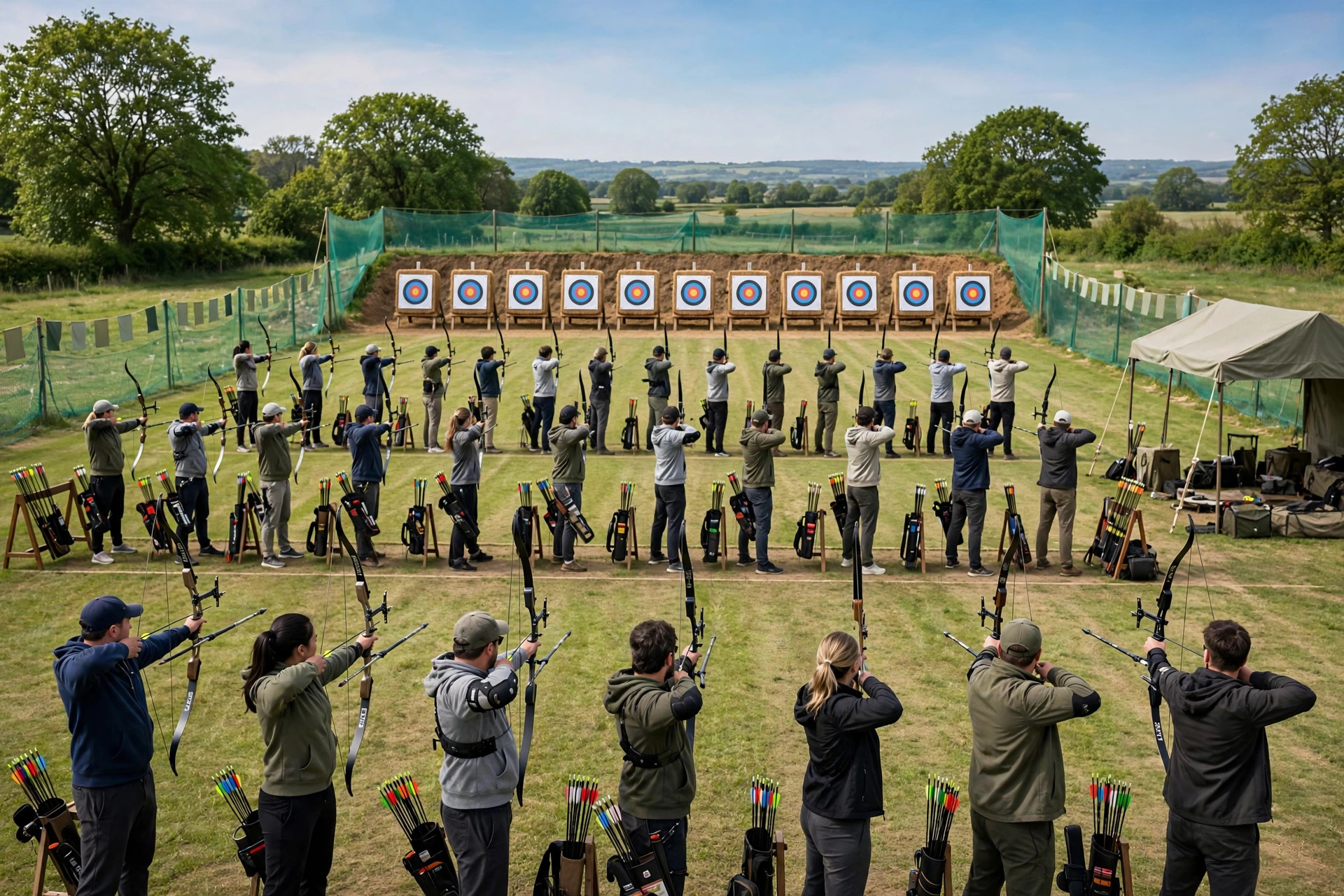
The most famous shooting venue in the teer world is the Polo Ground in Shillong. Each teer day, large squads of archers assemble on this historic ground, each shooter aiming at a target set some distance away. Spectators and ticket sellers gather around, and the atmosphere carries the excitement of a sporting event as much as a lottery draw. The ground can accommodate the dozens of archers required for a full session, and its central location in the city makes it the natural focal point of teer’s daily rhythm. For visitors, the Polo Ground has become something of a landmark, the physical stage on which meghalaya teer unfolds in the open air.
From Pastime to Regulated Industry
The road from informal betting to a licensed industry was not short. For years, teer operated in a grey area: archery shooting itself was a traditional sport, but wagering on the outcome sat uneasily with the general laws against gambling. The turning point came when Meghalaya decided that regulation was wiser than suppression. Three legislative milestones mark this journey, and each one is worth understanding.
The 1970 Act and Exempted Games
The earliest pillar of the framework is the Meghalaya Prevention of Gambling Act, 1970. As its name suggests, this law was aimed at curbing gambling in the state. Crucially, however, it gave the state government the power to exempt notified games from its prohibitions. This exemption mechanism became the legal doorway through which teer would later pass. The Law Commission of India, in its Report No. 276 on gambling and sports betting, discusses how this framework left room for the state to recognise games with cultural roots instead of sweeping them into a blanket ban.
Section 14A of the 1982 Amendment Act
The decisive legal foundation for modern teer came with the Meghalaya Amusements and Betting Tax (Amendment) Act, 1982. Section 14A of this law created a licensing system for bookmakers in connection with arrow shooting. The Act defines licensed bookmakers for the game of arrow shooting, and it expressly provides that the term “arrow shooting” includes the game of teer. This was the moment teer moved from tolerated custom to recognised, taxable, licensed activity. The amendment sits within a taxation statute, which reveals the state’s pragmatic thinking: rather than driving betting underground, the government would license it, tax it, and keep it visible. You can read the amendment itself on the official state portal of Meghalaya government laws, hosted as the Meghalaya Amusements and Betting Tax (Amendment) Act, 1982.
The 2018 Act: Full Regulation
The final piece of the puzzle arrived with the Meghalaya Regulation of the Game of Arrow Shooting and the Sale of Teer Tickets Act, 2018, often shortened in conversation to the meghalaya teer act. Where the 1982 amendment established licensing and taxation, the 2018 Act further regulates the game itself and the sale of teer tickets. It tightened the legal structure around how the game is conducted, how tickets are sold, and who is authorised to organise sessions. Together, the 1970 Act’s exemption power, the 1982 licensing regime, and the 2018 regulation form a three-layer legal foundation that is genuinely unusual in Indian gambling law: a traditional game, expressly named in statute, operated openly under licence. The national Law Commission’s discussion of this framework in Report No. 276 shows that legal scholars treat Meghalaya’s approach as a distinctive model worth studying.
How Meghalaya Teer Works Today
With the legal background settled, it is easier to understand how a teer day actually runs. The format is simple on the surface, and every element of it is shaped by the regulatory structure described above.
The Two Rounds: FR and SR
Each teer session consists of two rounds, known universally as the first round (FR) and the second round (SR). In each round, the archers shoot their arrows at the target, and the total number of arrows that hit is counted. The winning number for the round is the last two digits of that total, a number from 0 to 99. Bettors purchase tickets naming a number in that range before the round begins. If the example shown on a ticket stub is “-“, that is example only, not a real result; actual results are published after each round is completed and counted.
Licensed Counters Across Shillong
Tickets are sold through licensed counters spread across Shillong and other towns in Meghalaya. The licensing system created under the 1982 Act is what separates these counters from ordinary gambling dens: they operate with permission, pay taxes, and follow the rules laid down by the authorities. On a typical teer day, the city runs to a familiar rhythm. Counters sell tickets for the first round through the morning, the FR session takes place and its number is declared, then the cycle repeats for the SR. This daily schedule has made teer part of the fabric of Shillong life, as routine for many residents as the morning newspaper. Visitors curious about the daily rhythm of the game often check the teer result list to see how each day’s rounds unfolded.
Teer Prize Structure
The teer prize works on a simple principle: it is a fixed multiple of the stake, set by the licensed counter where the ticket was purchased. In other words, a winning ticket pays out an agreed multiple of the amount the bettor wagered, with the multiple published by the counter so players know the terms before they play. Because prize multiples are a matter for each licensed operation rather than a single national figure, this article does not state a specific multiplier as fact. What matters is that the terms are fixed in advance and visible at the counter, which is part of what regulation is meant to guarantee.
The Khasi Hills Archery Sports Association
Teer is conducted under the aegis of the Khasi Hills Archery Sports Association, the organisation that anchors the game in the archery community. This is a significant detail, because it shows how the legal framework preserves the sport at the core of the lottery. The association represents the archers, organises the shooting sessions, and maintains the link between teer and the Khasi archery tradition from which it grew. Without this body, teer could easily have drifted into being a pure numbers racket with archers as hired hands; with it, the game retains its identity as a sport that happens to be wagered on. For the state, the association’s involvement is also a practical safeguard: the people shooting the arrows are accountable to a recognised sporting body, not to anonymous operators.
Cultural Significance Alongside Legal Status
One of the most interesting things about meghalaya teer is that its legal status and its cultural status reinforce each other. In many parts of India, lotteries are grudgingly permitted as revenue raisers. In Meghalaya, teer is something the state chose to protect because of its roots. Archery remains a point of Khasi pride, and the daily gatherings at grounds like the Polo Ground function as social occasions, not just betting windows. Elders pass the tradition to younger archers, counters are family businesses in many cases, and the game provides livelihoods for archers, ticket sellers, and the small businesses that cluster around the venues. The legal framework did not create this culture, but it gave it room to survive in the open. You can read more about the people and purpose behind this site on our about us page, which explains how we cover teer as both a sport and a public institution.
Teer Rules Every Player Should Know
For anyone taking part, the teer rules that matter most are straightforward, and they all flow from the legal framework.
First, teer is a legal lottery in Meghalaya only because of the licensing system described above. The 1970, 1982, and 2018 Acts apply within the state, and the licensed counters operate under Meghalaya’s authority.
Second, teer is for adults only. Tickets may be sold to and purchased by persons aged 18 and above. This 18+ rule is non-negotiable, and counters are expected to enforce it.
Third, play only through licensed counters. The entire point of the 1982 and 2018 Acts is that authorised, taxable, visible operations are legal while unlicensed betting is not. Buying from a licensed counter protects the player as well as the operator.
Fourth, play responsibly. Teer is a game of chance tied to a live sporting event; no knowledge of archery can change the outcome of the last two digits. Set a limit before you play, never wager money you cannot afford to lose, and treat the game as entertainment, not income. If you ever need help or information about the game and its rules, you can reach us through our contact page.

How Meghalaya Teer Differs From Other State Lotteries
India’s lottery landscape is mostly made of paper draws run by state governments under the Lotteries (Regulation) Act, 1998. The meghalaya lottery model for teer sits apart from that world in several ways, and the differences are worth understanding.
First, most state lotteries are pure chance draws with no sporting element at all. Meghalaya teer is anchored to a live event: the outcome depends on real archers shooting real arrows on a real ground. The number is derived from something you can watch happen, which gives the game a transparency that a machine draw cannot match.
Second, the licensing is personal and local. Rather than a single state lottery department running everything, Meghalaya licenses individual bookmakers and counters, and the Khasi Hills Archery Sports Association keeps the sporting side honest. This decentralised structure reflects the game’s origins as a community activity rather than a government revenue scheme.
Third, the legal basis is bespoke. Other states rely on the central Lotteries (Regulation) Act framework. Meghalaya built its own path through the 1970, 1982, and 2018 Acts, expressly naming teer in statute. That is why the question “is teer legal” has such a clear answer here: the state did not stretch an old law to cover it, it wrote new law for it.
Frequently Asked Questions
Is teer legal in Meghalaya?
Yes. Teer betting in Meghalaya is licensed under Section 14A of the Meghalaya Amusements and Betting Tax (Amendment) Act, 1982, which defines licensed bookmakers for arrow shooting and states that “arrow shooting” includes the game of teer. The Meghalaya Regulation of the Game of Arrow Shooting and the Sale of Teer Tickets Act, 2018 further regulates the game and ticket sales, while the Meghalaya Prevention of Gambling Act, 1970 lets the government exempt notified games. Together, these laws make licensed teer fully legal within the state.
What is the meghalaya teer act?
The phrase usually refers to two laws: the Meghalaya Amusements and Betting Tax (Amendment) Act, 1982, whose Section 14A created the licensing regime for teer bookmakers, and the Meghalaya Regulation of the Game of Arrow Shooting and the Sale of Teer Tickets Act, 2018, which further regulates the game and the sale of teer tickets. Both sit on top of the exemption power in the Meghalaya Prevention of Gambling Act, 1970.
How does a meghalaya teer round work?
In each round, archers shoot arrows at a target and the arrows that hit are counted. The winning number is the last two digits of that total, giving a number from 0 to 99. Ticket holders who chose that number win. Each session has two rounds: the first round (FR) and the second round (SR).
What is the difference between FR and SR?
FR and SR are simply the two rounds of a single teer session. The first round is shot and counted first, and its winning number is declared before the second round takes place. Bettors buy separate tickets for each round, and each round produces its own winning number.
Who runs teer in Shillong?
Teer is conducted under the aegis of the Khasi Hills Archery Sports Association, which organises the archers and the shooting sessions. Tickets are sold through licensed counters authorised under the state’s licensing regime. The state government oversees the framework through the 1982 and 2018 Acts.
How is the teer prize calculated?
The teer prize is a fixed multiple of the stake, set and published by the licensed counter where the ticket was purchased. A winning ticket pays out that agreed multiple of the amount wagered. The multiple is fixed in advance so players know the terms before they play.
Is there an age limit for playing teer?
Yes. Teer is a legal lottery in Meghalaya for adults aged 18 and above only. Counters may not sell tickets to minors, and players are expected to play responsibly, wagering only what they can afford to lose.
Where is teer played in Shillong?
The best-known venue is the Polo Ground in Shillong, where large squads of archers shoot each teer day. Licensed counters operate across the city and in other towns in Meghalaya, selling tickets for the day’s FR and SR rounds.

Conclusion
Meghalaya teer stands apart because the law followed the culture instead of fighting it. Shillong’s Khasi archery tradition gave the game its soul, the Polo Ground gave it a stage, and three generations of legislation, the 1970 exemption power, the 1982 licensing regime, and the 2018 regulation, gave it a legal home. The Khasi Hills Archery Sports Association keeps the sport at the centre, licensed counters keep the business transparent, and players get a game whose rules are written in public law rather than whispered in back rooms. Whether you watch the archers for the love of the sport or hold a ticket for the day’s rounds, it is worth knowing the history behind the game. For the latest daily rounds and schedules, visit the Shillong Teer Result homepage.